
Your fibreglass pool might look perfectly clear one afternoon, then develop a green tinge a few days later. In Mackay, hot, humid weather can make that change feel frustratingly familiar, particularly when the family just wants to swim.
Algae can take hold when pool water isn't properly sanitised, and heavy rain can add another complication. You might clean the walls and clear the water, only to see the same patches return. Without understanding what's encouraging the growth, repeated treatments can waste time and money.
Small changes in water condition are easier to address before green patches spread. This guide explains how Mackay's humid climate affects algae risk, what care a fibreglass pool needs, and when extra treatment or professional advice may be worthwhile.
Highlights
- Mackay's humidity coincides with warm weather and rainfall that can encourage algae when sanitation weakens.
- Fibreglass pools have smooth gel coat surfaces that resist algae attachment, although algae can still grow in poorly sanitised water or damaged areas.
- Algaecide can provide additional protection, but it doesn't replace chlorine, and copper-based products may cause visible staining.
- Preventing algae depends on regular water testing, chlorine and stabiliser levels, reliable circulation, clean filters, and surface brushing.
- Before heavy rain, prepare your pool and drainage; afterwards, inspect for contamination and retest water safely.
- When algae keeps returning, examine water test patterns and persistent trouble spots, then seek professional advice before repeating chemical treatments unnecessarily.
Why Algae Can Become a Problem in Mackay's Humid Climate
In Mackay, hot summer days often come with sticky humidity and sudden heavy rain. Most of the region's rainfall arrives between December and March, when daytime temperatures are typically around 29–30°C, which can make algae a recurring concern for backyard pool owners.
Humidity describes the amount of water vapour in the air, but it does not directly feed algae living in your pool. Instead, humid periods in Mackay often coincide with high temperatures and wet-season showers. The pool is affected by warmer water and whatever the rain washes into it, not just by moisture in the air itself.

When pool water stays warm, many algae types can reproduce more quickly. Warmer conditions can also increase a pool's chlorine demand, particularly when it gets plenty of use.
Growth also depends on nutrients, particularly nitrogen and phosphorus. These can arrive with garden soil, dead leaves, dust, and other debris. Even a well-kept backyard can contribute small amounts, especially when trees or planted beds sit close to the water.
Mackay's downpours can add to the problem by washing dirt and organic material from nearby surfaces into the pool. A large volume of rain can also dilute existing chemicals and change the water balance. Those changes may reduce the pool's ability to control algae if its sanitiser level becomes too low.
These conditions can affect any swimming pool, but the material used for its interior also influences how easily algae can attach to the surface. This is where fibreglass pools may have an advantage over other pool types.
Are Fibreglass Pools Resistant to Algae?
Fibreglass pools are generally more resistant to algae attaching to their surfaces than pools with rough concrete or plaster finishes. Their main advantage is the smooth, non-porous gel coat, which gives algae fewer tiny gaps to cling to.
The gel coat forms the finished interior of the fibreglass shell during manufacture. Unlike a coarse plaster or exposed-pebble surface, it has fewer pockets where algae and deposits can settle. You can feel that difference when you touch an undamaged fibreglass wall. Its even finish makes it harder for algae to hold on, and growth is generally easier to remove.
With that being said, a smooth gel coat cannot kill algae or disinfect pool water.
Algae can remain suspended in the water without attaching to the walls, and visible growth can develop if conditions are favourable. That's why a fibreglass pool can turn green even when its surface looks clean and feels smooth. The water can become affected before the walls do.
For homeowners, this feature can make fibreglass pools easier to look after, particularly when compared with rougher pool finishes. Algae is generally less firmly attached to an intact gel coat surface, so removing it can take less effort. That's a genuine advantage, although, to repeat, the shell alone cannot keep the pool free of algae.
Should You Use Algaecide to Prevent Algae?
Algaecide can help prevent algae during humid weather, but not every fibreglass pool needs it regularly. A properly sanitised pool can usually stay clear without it. An additional treatment may be worth considering if algae has been a persistent concern in the past.

Different formulas act on algae cells in different ways, and some are intended for regular prevention while others are sold for treating existing growth. Even when a product works well against algae, it does not replace chlorine's job of disinfecting pool water and controlling harmful germs.
Choosing an algaecide involves more than picking a bottle labelled 'algae killer'. The ingredients determine how the product behaves in your pool, including whether it can cause staining or foam.
The main types you may come across are:
- Copper-based algaecides: Control algae, but elevated copper levels may contribute to staining on pool surfaces.
- Standard quat algaecides: Contain no copper, although overdosing can produce foam, particularly around water features.
- Polyquat algaecides: Generally produce less foam than standard quats and do not introduce copper into the water.
Whatever type you choose, follow the product's label instructions and never mix different pool chemicals.
The possible consequences extend beyond temporary foam. Copper can accumulate with repeated use and may contribute to staining, especially when other pool products also introduce metals. If it leaves a green or dark stain on the gel coat, that discolouration may be mistaken for algae, and adding more algaecide will not remove a metal stain and may make it worse.
If you decide to use one, choose a product registered for pool use in Australia and check that its label permits use in fibreglass pools and with your sanitation system.
If you're unsure which formula is appropriate, seek advice before adding it.
How to Prevent Algae in Your Fibreglass Pool
In Mackay, you may need to pay closer attention during the hotter months, particularly when the family uses the pool every day. You do not need every chemical on the shelf or a pump running around the clock. Start with a few sensible checks, understand what the results tell you, and make adjustments when they are needed.
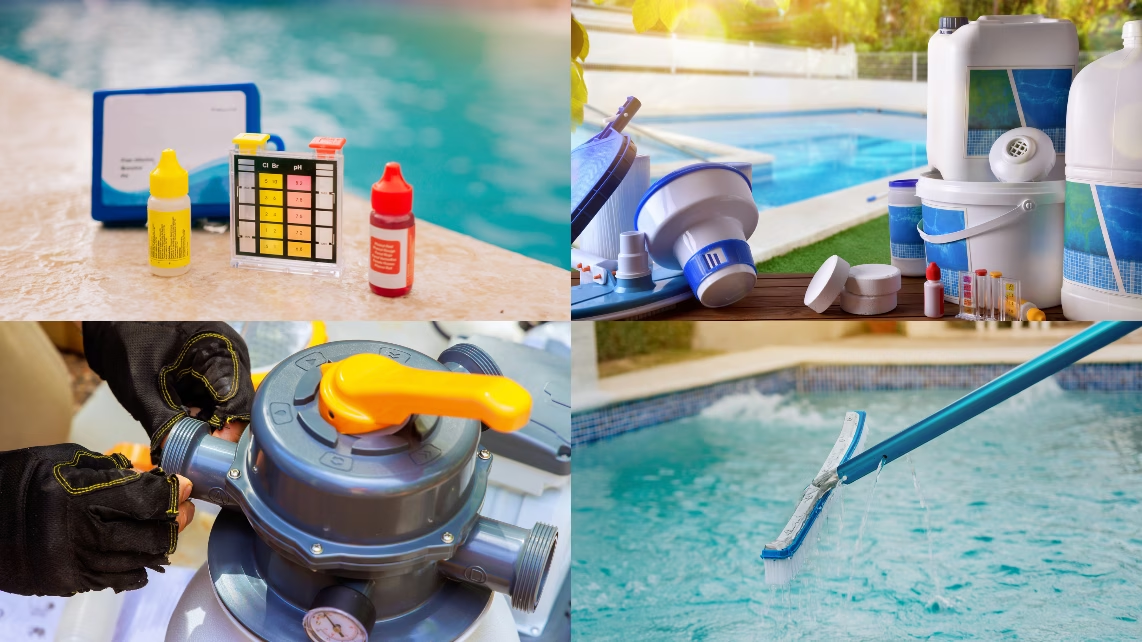
Test and Balance Your Pool Water Regularly
Use a home test kit to check pH regularly, ideally daily during hot weather or heavy pool use. Collect a sample as directed, away from return jets, and read it promptly. Store test kits away from heat and moisture.
The pH reading tells you how acidic or alkaline the water is. Around 7.2 to 7.6 is a common general target, although you should follow the guidance for your particular fibreglass surface and treatment system.
Check total alkalinity weekly. It buffers water against sudden pH changes. Calcium hardness also matters, as excess calcium can encourage scale formation. If your home kit cannot measure these reliably, take a sample to a local pool shop for accurate testing.
Make chemical adjustments based on actual readings and the dosage directions for your pool's water volume. Add one treatment at a time, allow the recommended circulation period, and test again before making another change.
Maintain Proper Chlorine Levels
Free chlorine is the portion available to sanitise pool water. It controls algae and harmful microorganisms, but the level changes as people swim.
A commonly recommended free chlorine range is 1 to 3 ppm, but warmer outdoor pools using stabiliser may require higher levels. Australian public health guidance recommends at least 3 ppm when stabilised pool water exceeds 26°C.
Don't add chlorine just because water looks dull. Check the reading, calculate the correction for your pool volume, and follow the label. Excess chlorine can irritate swimmers or damage equipment, while too little leaves water inadequately sanitised.
Check Your Chlorine Stabiliser and Saltwater Chlorinator
Outdoor pools often use a chlorine stabiliser called cyanuric acid or CYA. It protects chlorine from rapid breakdown by sunlight, allowing it to last longer. Too much, however, can reduce chlorine's sanitising effectiveness even when your test shows chlorine is present.

A commonly recommended stabiliser range for outdoor pools is around 30–50 ppm, although the right level depends on your sanitation system.
Stabiliser can build up if you use certain chlorine tablets or powders because it does not disappear as quickly as chlorine. Test it periodically and avoid adding more without first checking the result.
With a saltwater chlorinator, salt does not sanitise water by itself. The unit converts dissolved salt into chlorine as water passes through its cell. Compare its output setting and operating schedule with actual free-chlorine readings instead of just looking at the display.
Salt level, cell condition, and water flow all affect how much chlorine the chlorinator produces. Check warning lights and look for mineral scale on the cell during routine inspections. Follow the manufacturer's cleaning instructions, as scraping or unnecessary acid cleaning may damage it.
Keep Your Pool Water Circulating and Filters Clean
Your pump moves water through the skimmer, filter, and return outlets so sanitiser reaches different parts of the pool. Check that return jets are moving water and that the pump runs as programmed. Weak flow may leave some areas poorly circulated.
Around 6 to 8 hours a day is a common starting point for many home pools, but the right schedule depends on your pump's flow rate, pool size, and usage. Some pools may need longer filtration, particularly during periods of heavy swimming.
A dirty filter restricts flow and can leave fine particles behind. Watch the pressure gauge, if fitted, and follow the manufacturer's instructions for cartridge cleaning or sand-filter backwashing.
Brush the Pool Surfaces and Remove Debris
Brush the pool walls, steps, floor edges, and places an automatic cleaner may miss. Choose a soft nylon-bristle brush designed for fibreglass. Avoid metal brushes and abrasive tools, which can scratch the gel coat and leave damage that routine cleaning will not remove.
A weekly brushing session is a useful starting point for many fibreglass pools, though shaded corners may need more attention. Work gently around ledges and fittings, allowing circulation to carry loosened particles towards the filter.
Skim leaves before they sink, and vacuum dirt from the floor. Empty the cleaner basket or robotic cleaner's collection chamber after use. If your pool is beside a garden, trimming overhanging plants reduces how much debris falls into the water.
Keep an eye on the waterline, too. Sunscreen, body oils, and airborne grime can leave a ring that skimming cannot remove. Wipe it with a non-abrasive cleaner approved for fibreglass and follow the manufacturer's directions.
How to Protect Your Pool During Mackay's Humid Wet Season
An ordinary rainstorm needs a different response from a flood. Rain falling directly into the pool generally calls for routine checks once conditions improve. Muddy runoff or floodwater, however, can carry soil, waste, and germs that ordinary pool treatment may not safely manage.
The distinction matters when heavy rain continues for days and surrounding gardens become waterlogged.

Prepare Your Pool Before Heavy Rain
When heavy rain is forecast, test the water beforehand and correct any readings outside the recommended range. Do this while conditions are safe so the treatment has time to circulate. Avoid adding extra chlorine without a test simply because rain is coming.
Walk around the pool area and check where rainwater will flow. Clear leaves from nearby surface drains, and move loose soil or garden waste away from paving that slopes towards the water. If a garden bed regularly sends dirty runoff towards your pool, speak with a drainage professional about diverting it safely. Do not block designed overflow outlets.
Secure furniture, pool toys, and cleaning equipment that strong winds might blow into the water. Keep pool chemicals sealed in their original labelled containers in suitable dry storage, well away from places likely to flood or be accessed by children.
Before severe weather arrives, follow your equipment manufacturer's shutdown instructions, but only if you can do so safely from a dry location. Don't handle plugs, switches, or pool equipment during lightning or flooding.
Also, avoid emptying or substantially lowering the pool for a storm: rising groundwater can press against the fibreglass shell. Ask your installer before making large water-level changes.

Check Your Pool Water After Rainfall or Storms
Once the storm has passed and it is safe outside, inspect the area before cleaning. Look for damaged fencing, fallen branches, loose paving, and muddy water entering the pool. Keep children away from the pool until the area is safe.
Remove large branches and leaves with a net, then clear the skimmer basket if it is safe. Look at the water level and the equipment area before restarting the system.
If a pump, chlorinator, or other electrical equipment has been flooded, leave it off until a licensed electrician has declared it safe. Don't assume dry-looking equipment is undamaged.
After ordinary rainfall, retest the water rather than relying on readings taken before the storm. Check free chlorine and pH, then adjust only what the results require. Allow the prescribed circulation time and confirm the water is clear and properly sanitised before swimming.
If muddy runoff or floodwater has entered your pool, the contaminated water needs to be removed and the pool properly cleaned and sanitised. However, never attempt to drain a fibreglass pool while the surrounding ground is saturated.
Seek professional advice about groundwater conditions, safe draining, and water disposal before any work begins.
What to Do if Algae Keeps Coming Back
When algae returns only days after your pool looked clear, the earlier treatment may have removed visible growth without addressing its cause. Repeating the same clean-up can become expensive, especially when the pool stays unusable between attempts.

Spot the Early Signs of Returning Algae
Look closely at steps, benches and corners where water may move slowly. Early algae can appear as faint green patches or a dusty film before the whole pool changes colour.
If gentle brushing lifts a green cloud into the water, growth may be present.
A slippery feeling on the walls can be another warning, particularly if the surface was cleaned recently. Notice whether the same patches return after brushing. However, not every mark is algae. Copper stains and mineral deposits can sometimes resemble growth, so colour and texture alone are not enough for a certain diagnosis.
Water that loses its sparkle or develops a slight green haze deserves attention. Poor filtration and suspended dirt can also cause cloudiness, though, so test the water before deciding algae is responsible. Watch whether the haze deepens over time.
Identify What's Causing Repeated Algae Growth
If algae returns after weekends when the pool gets heavy use, compare water readings from before and after those days. The same applies during extended hot spells. Repeated low free-chlorine readings may show that the sanitiser is being consumed faster than the system can replace it, even when you have followed your usual routine.
A single chlorine reading cannot tell you what happened between tests. Check several days of results, including how much chlorine you added. If algae persists despite adequate readings, excessive stabiliser may be reducing chlorine's effectiveness, so seek a fuller water analysis.
Sometimes an earlier clean-up leaves growth behind where a brush or vacuum could not reach. Areas around fittings, behind ladders, or within sheltered recesses deserve closer inspection. A poorly maintained filter can also struggle to remove particles after treatment.
Consider another cause if coloured marks remain fixed in place or the water turns green soon after chemicals are added. Dissolved metals may be responsible instead of returning algae. Have the water or stain tested before repeating shock treatments that could worsen discolouration.
Know When to Seek Professional Assistance
Seek professional advice if algae returns after properly completed treatments, the sanitiser level will not stay stable, or the same spots keep reappearing. Persistent problems may require more detailed testing beyond what a basic home kit can show.
Bring recent water readings, details of products added, and photos showing when the problem appeared. A professional may recommend a more complete water analysis, inspect circulation and filtration, or check the chlorinator's output under normal operating conditions.
If the water is too cloudy to see the floor, keep everyone out until it is safe to swim. Severe blooms may call for a supervised treatment plan rather than more trial-and-error chemical additions. Ask the professional what caused the return and what should change afterwards.
Final Thoughts
Fibreglass pools have surfaces that are easier to keep clean, but algae can still develop when water conditions slip. Mackay's humid wet season makes it worth paying closer attention to your pool's condition, especially around storms. Consistent care is the most reliable way to reduce problems.
One useful habit is to keep a simple record of your pool's water test results. After a few weeks, you may spot patterns around hot days or heavy use and make adjustments before algae appears.
If you ever need help with your fibreglass pool project, just reach out to us. We are licensed installers with years of experience installing fibreglass pools in Mackay, and we're happy to chat or give you a quote.
And if you're still thinking about which fibreglass pool to choose, check out the fibreglass pool designs our partner offers. There's always something for every backyard and budget.