
A clear fibreglass pool can still hide water problems, and many new owners only notice them once the water turns cloudy, feels harsh, or starts eating up chlorine too fast.
That is when pool care starts feeling frustrating. One small issue can lead to algae, swimmer discomfort, extra cleaning, and even damage to the gel coat or equipment if the water stays out of balance for too long.
This guide walks you through the basics in a simple order, so you can understand the parts of water balance, test them properly, and make the right fixes before small water issues become expensive ones.
Highlights
- Balanced pool water keeps your fibreglass pool safer, clearer, more comfortable, and easier to maintain every week.
- Test pH, chlorine, alkalinity, calcium hardness, and stabiliser regularly so small water problems do not turn into algae or extra work later.
- Clean the pool first, test carefully, then add one chemical at a time in the right order with the pump running.
- Shock the pool when water looks cloudy or green, smells odd, or gets hit by storms, heat, or heavy swimming loads.
- Test water often, keep the pump running during adjustments, avoid draining green water, and get professional help when needed.
Why a Balanced Fibreglass Pool Water Matters
With a fibreglass pool, water balance affects the pool surface every day, not just the water itself. If the chemistry stays off for too long, the finish can lose its shine, chlorine can struggle to do its job, and small water problems can turn into bigger maintenance jobs.
Here is where balanced water makes a real difference:
- It helps protect the gel coat finish. Fibreglass pools have a smooth gel coat surface, and poor water chemistry can stress that surface over time, leading to dullness, staining, scaling, or other damage.
- It keeps chlorine working properly. When pH gets too high, chlorine becomes less effective, which means the water can look fine at first but still be harder to keep clean and sanitary.
- It makes the pool nicer to swim in. Water that is too acidic or too strong can sting eyes, dry skin, and make every swim less comfortable for kids and adults alike.
- It helps stop algae before it spreads. Fibreglass pools resist algae better than rougher pool surfaces, but algae can still grow when water balance slips and routine care gets missed.
- It can reduce wear on pool equipment. Balanced water is easier on your pump, filter, and other parts, which helps your whole system run better and lowers the chance of avoidable repair bills.
If you ignore water balance for a few weeks, the signs usually show up fast. The water may turn cloudy, chlorine may disappear too quickly, the waterline can get grubby, and the pool can start needing more work than it should for a fibreglass shell that is normally easy to care for.
Essential Fibreglass Pool Water Balance Levels
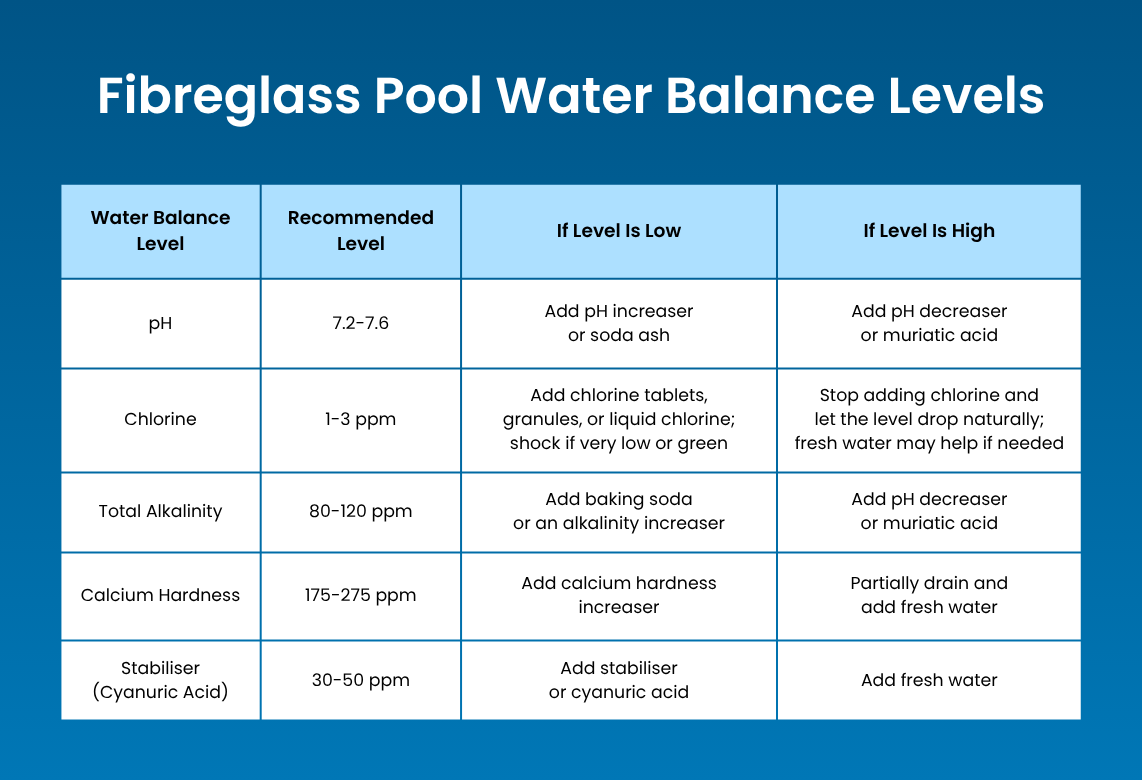
Pool water can look clean and still be out of balance. These core water balance levels work together in the background, and each one affects how safe, clear, and easy your fibreglass pool is to look after.
pH Level
pH tells you whether your pool water is too acidic or too alkaline. It is one of the first things pool owners learn, and for good reason.
In a fibreglass pool, the usual target sits around 7.2 to 7.6.
This level matters every single week. When pH drifts too low, the water gets harsh and can irritate skin and eyes. When it climbs too high, the water can turn cloudy, and chlorine stops working as well as it should.
It also matters for the pool itself. Fibreglass pools are known for their smooth gel coat finish, and badly balanced water can make that finish look dull over time. A pool can still hold water and function, but it may not stay looking fresh and clean for as long as it should.
If the water feels rough, looks a bit hazy, or seems harder to keep clear than usual, pH is often one of the first things worth checking.
Chlorine
Chlorine is the main sanitiser in most home pools. Its job is to keep the water safe by killing germs and helping control algae.
For many fibreglass pools, the recommended range is about 1 to 3 parts per million (ppm).
For us, pH and chlorine are the most important pool chemicals to understand, and they are also closely related. If chlorine seems to disappear too fast or does not seem to be keeping the water as fresh as usual, the issue may not be chlorine alone. The pH level often tells part of the story, too.
In a fibreglass pool, chlorine still needs watching even though the smooth surface makes algae and dirt harder to stick. That smoother finish helps reduce algae pressure, but it does not replace sanitising. You still need chlorine to do its job in the water itself.
Total Alkalinity
Total alkalinity helps keep your pool water steady. Think of it as the level that supports pH and stops it from bouncing up and down too fast.
For fibreglass pools, the usual target is 80 to 120 ppm.
When alkalinity is off, pH often becomes harder to control, and that can lead to cloudy water, swimmer discomfort, and more chemical ups and downs through the week.
So if your pH keeps drifting soon after testing, total alkalinity is often part of the reason.
Calcium Hardness
Calcium hardness is the amount of dissolved calcium in the pool water. It is still important in a fibreglass pool, even though fibreglass does not have the same surface needs as concrete.
For fibreglass pools, we recommend a range at 175 to 275 ppm.
This level matters for both the look of the pool and the feel of the water. If calcium gets too low, the gel coat can lose some of its shine. If it gets too high, the water may go cloudy, and white scales can start building up on the shell, waterline, and equipment.
High calcium can be extra frustrating in warmer places and hard water areas. Once the scale starts sticking to a fibreglass surface, it can become harder to clean and more noticeable, especially on darker pool colours.
Stabiliser (Cyanuric Acid)
Stabiliser, also called cyanuric acid or CYA, helps protect chlorine from being broken down by the sun. This is especially important in outdoor pools, where strong UV can burn through chlorine much faster than many new pool owners expect.
A common target range for fibreglass pools is 30 to 50 ppm.
This chemical matters a lot in Mackay or Australia, where sunshine can be strong for much of the year. Without enough stabiliser, chlorine can disappear too quickly during the day, and the pool may struggle to stay properly sanitised even when you are testing it often.
Too much stabiliser can also cause trouble. Chlorine may still show on a test, but it can become less effective, which makes the water harder to manage and can lead to confusion when the pool does not respond the way you expect.
A handy tip is to pay closer attention to the stabiliser if your chlorine seems to vanish fast in sunny weather.
Tools You Need for Balancing Fibreglass Pool Water
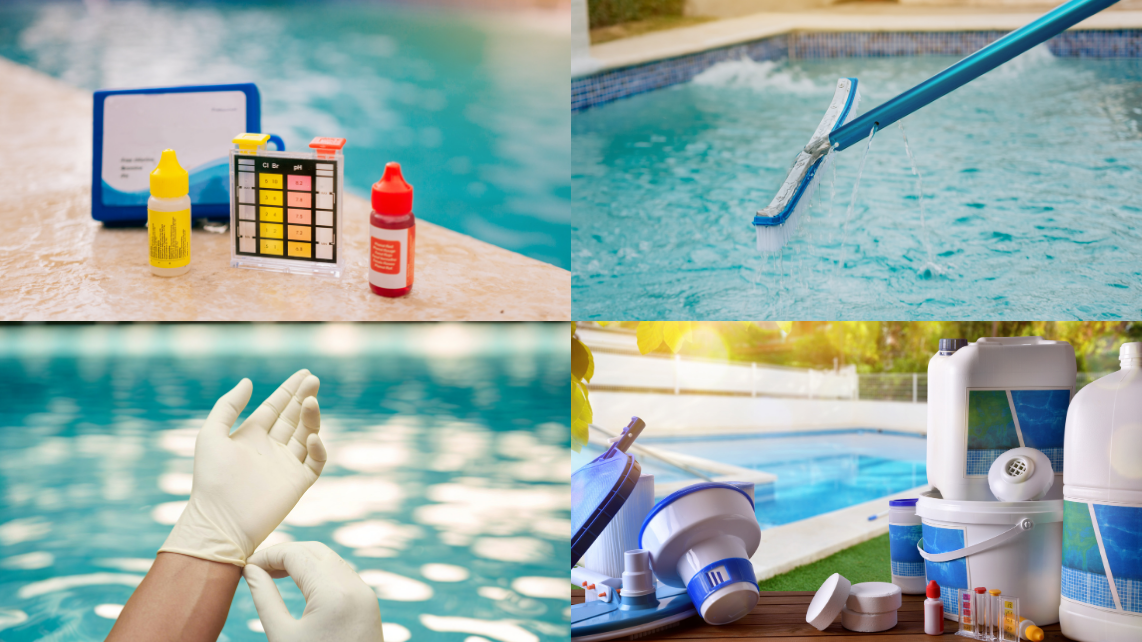
Getting the right result starts with using the right tools. Pool water can change fast, and it is much easier to stay on top of it when you have simple gear ready before you test or add anything.
Test Kits
A good test kit helps you see what is really going on in the water. Clear water does not always mean balanced water, so testing is the only reliable way to know where your pH, chlorine, alkalinity, calcium hardness, and stabiliser levels sit.
Here are the main types of test kits:
- Liquid test kit. This is one of the most reliable options for home pool care and is widely used for checking the main water balance levels.
- Test strips. These are quick and easy to use, which makes them handy for beginners and regular spot checks.
- Digital pool tester. This can be easier to read than colour-matching kits, though the setup and cost may vary by brand.
- Pool shop water testing. This is useful when your readings seem off, your water keeps going cloudy, or you want a second check on a problem.
Chemicals and Dosing Tools
The tools and products you use here will depend on which level needs fixing. Not every pool needs every product at the same time, so it helps to match the dosing item to the chemical you are working with and keep everything clearly labelled.
Here are the main chemicals and dosing tools to know:
- Alkalinity increaser or baking soda. This is used when total alkalinity is low and needs lifting.
- pH decreaser or muriatic acid. This is used when total alkalinity is high or when pH needs to come down.
- pH increaser or soda ash. This is used when pH is too low and needs to be raised.
- Chlorine tablets, granules, or liquid chlorine. These are used to keep free chlorine in the proper range for sanitation.
- Pool salt. This is needed for salt pools so the chlorinator can keep producing chlorine properly.
- Stabiliser or cyanuric acid. This is used when stabiliser levels are low, especially in outdoor pools or pools using liquid chlorine.
- Calcium hardness increaser. This is used when calcium hardness is too low and the water needs more calcium.
- Measuring jug or scoop. This helps you portion chemicals properly and avoid guessing.
- Pool bucket for pre-mixing when the label allows it. This can help with safer and more even applications for some products.
- Chemical dispenser or chlorinator. This is useful for tablets, depending on the sanitising setup of the pool.
Safety Gear
Pool chemicals are common household products, but they still need a bit of care when you handle them. A few simple pieces of safety gear can make chemical days feel calmer and help you avoid splashes, fumes, or mix-ups while you work.
Helpful safety gear includes:
- Safety glasses or goggles. Protects your eyes from splashes when you pour or mix chemicals.
- Chemical-resistant gloves. Keeps your hands safe from irritation when handling powders and liquids.
- Dust mask. Reduces the chance of breathing in any light dust when you open or scoop products.
- Old clothes or a light apron. Stops drips and splashes from ruining everyday clothing.
- A clean, dry storage tub with a lid. Helps you keep all chemicals upright, tidy, and away from kids and pets.
Cleaning Tools
Cleaning tools support your chemicals by removing the dirt and debris that uses up chlorine and makes the pool look tired. When you brush and skim often, the water usually stays clearer and easier to balance, especially in a fibreglass pool with a smooth shell.
Useful cleaning tools include:
- Pool brush with fibreglass-safe bristles. Helps you sweep off fine dust, film, and early algae from the walls, floor, and steps.
- Leaf skimmer or leaf net. Lets you scoop out leaves, bugs, and other debris before they sink and start to break down.
- Telescopic pole. Gives you easy reach across the pool so you can use the same pole for your brush and skimmer.
- Vacuum head or automatic pool cleaner. Picks up settled dirt from the floor so the filter and chemicals do not have to work as hard.
- Soft cleaning pad for the waterline. Helps you gently clean the waterline on a fibreglass pool without scratching the gel coat.
Pool Maintenance Log
A pool maintenance log is simply a record of what you test and what you add to the water. It can be a notebook, a printed sheet, or a simple spreadsheet, as long as you write down your test results, any chemicals added, and any changes you notice in the water.
Keeping a log makes life easier later. You can spot patterns like pH drifting the same way each week, see what worked when the pool went cloudy, and show a clear record if a warranty or service question comes up about how the pool has been maintained.
How to Test and Balance Pool Water
Testing and adjusting pool water is not hard once you have a routine. The main thing is to work in a calm order, use the right gear, and avoid rushing from one chemical to the next.
1. Clean the Pool First
Before you test anything, clean the pool properly. Scoop out leaves and bugs, brush the walls, steps, and waterline, and vacuum any dirt sitting on the floor.
If debris stays in the water, your test result may not reflect what is really going on in the pool.
2. Test the Water
The way you test the water will depend on the kit you are using.
Test strips are quick and simple, while liquid test kits usually give a more detailed reading of the main water balance levels. Either way, follow the instructions that come with your kit and test at least weekly, or more often after heavy rain, hot weather, or lots of swimming.
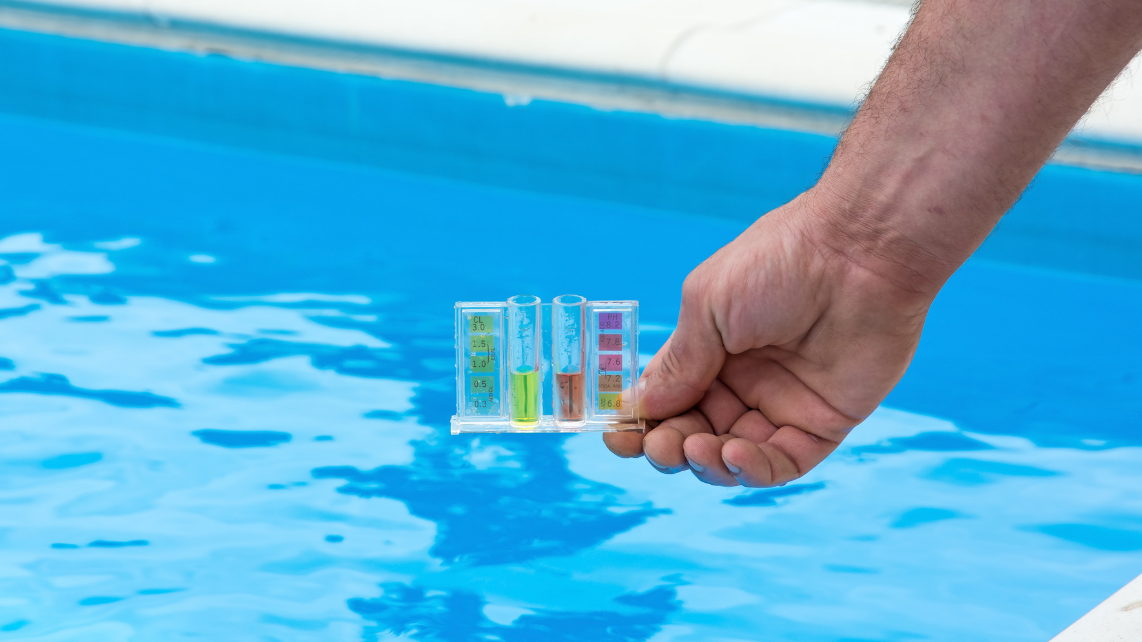
If you are using a liquid test kit, collect the sample the right way. Take it away from the skimmer or return jets, dip a clean cup elbow-deep into the water, then turn it upright to fill. That gives you a better sample from the body of the pool, not just water moving near the surface.
Try to test at about the same time of day each week. That makes it easier to spot changes and compare readings, especially if your pool gets a lot of sun or heavy use.
3. Read Test Results
Once you have your sample, compare the result with the guide that comes with your test kit. You are checking whether the main levels sit in range, especially pH, chlorine, total alkalinity, calcium hardness, and stabiliser.
This is also a good time to use your pool maintenance log. Write down the date, the readings, and anything you notice about the water, like cloudiness, strong smell, or early algae marks.
4. Balance the Water Step by Step
Once you know which levels are off, put your safety gear on first and keep the pump running before adding anything. Work slowly, measure carefully, and add only one chemical at a time so you do not create a bigger problem while trying to fix a small one.
Use this order when applying pool chemicals:
- Adjust alkalinity first. Raise low alkalinity with baking soda or a pool alkalinity increaser, and lower high alkalinity with pH decreaser or muriatic acid.
- Adjust pH next. Raise low pH with pH increaser or soda ash, and lower high pH with pH decreaser or muriatic acid.
- Adjust chlorine. Use tablets, granules, or liquid chlorine to keep free chlorine in range, and for salt pools, make sure there is enough salt for the chlorinator to work properly.
- Check stabiliser. Add cyanuric acid if stabiliser is low, especially if you use liquid chlorine or have a salt pool exposed to a lot of sun.
- Check calcium hardness last. Top it up only when it is low, as high calcium usually needs partial water replacement rather than another chemical fix.
After each chemical addition, let the pool water circulate with the pump running before you retest or add the next product.
As a simple rule, wait at least 15 minutes between chemical additions, retest pH after about 20 to 30 minutes, retest alkalinity and calcium hardness after about 2 to 4 hours, retest chlorine after about 4 to 6 hours, and give stabiliser about 24 hours before relying on a new reading.
Always follow the product label first, and never mix chemicals together or add them at the same spot at the same time.
When to Shock Your Pool
Shocking is not part of every normal pool day, but it does help when regular chlorine is not enough to catch up. In a fibreglass pool, shock treatment is usually needed when the water turns cloudy, starts looking green, smells odd, or gets hit by heavy rain, hot weather, or a lot of swimmers in a short time.
A shock treatment gives the water a much stronger sanitising hit than your usual daily chlorine level. That helps break down organic waste, fight algae, and bring the pool back under control when the water starts slipping away from you.
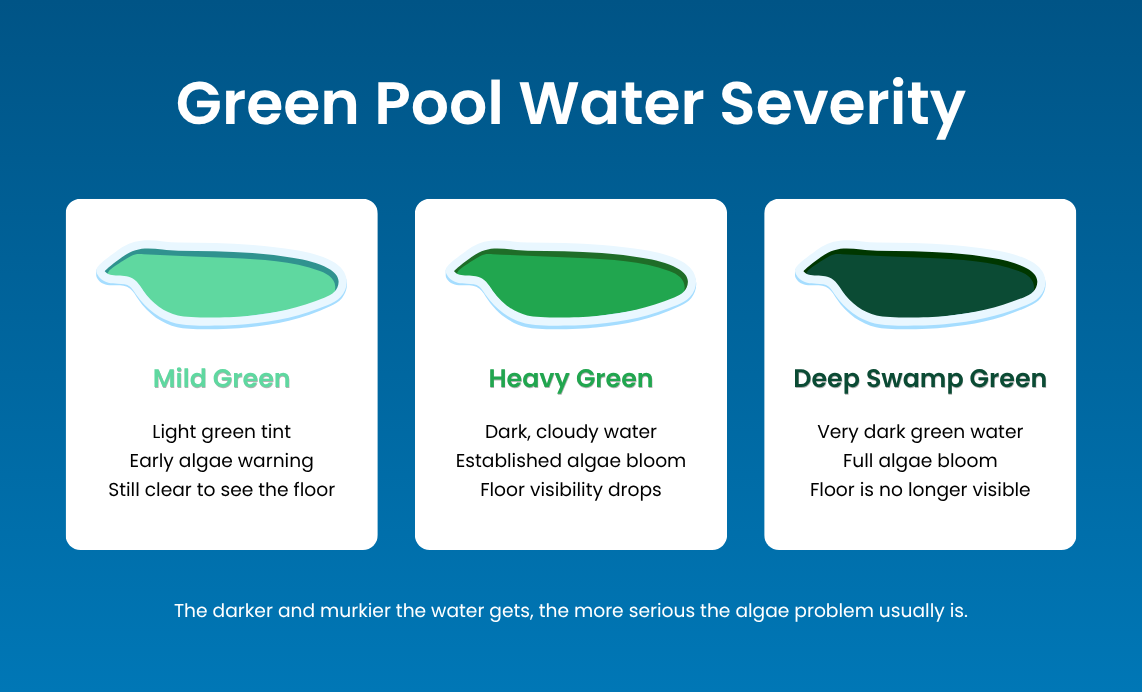
For most green or neglected fibreglass pools, a chlorine-based shock is the better choice. Non-chlorine shock can help with lighter oxidation jobs, but it is not usually the best option when algae is already taking over.
Shock works best in the evening, when the sun will not burn off chlorine as quickly, and the pump and filter should keep running for several hours after treatment to help the water circulate and clear.
Extra Tips for Fibreglass Pool Water Chemistry
Good pool care is not only about fixing problems after they show up. A few simple habits can help you catch small changes early and keep your fibreglass pool easier to manage through the week.
Test the Water Regularly
Regular testing gives you a clearer picture of what your pool is doing over time. Even when the water looks fine, pH, chlorine, alkalinity, calcium hardness, and stabiliser can drift out of range without obvious warning signs at first.
A good rule for most home pools is to test at least once a week. Test more often after heavy rain, hot weather, lots of swimmers, or a pool party, as these can all shift the water balance faster than usual.
It also helps to test on the same day each week if you can. That makes it easier to compare readings, notice patterns, and work out whether a small issue is becoming a regular one.
Keep the Pump Running During Adjustments
When you add pool chemicals, the pump should already be running. Moving water helps spread each product through the pool more evenly, which lowers the chance of strong chemical spots sitting in one area for too long.
This matters in a fibreglass pool, where you want water treatment to stay even and gentle across the shell. It also helps your test results make more sense later, as the water has had a better chance to mix properly before you check it again.
Do Not Drain to Fix Green Water
A green pool can look awful, but draining it is usually not the right fix. In most cases, green water can be cleaned up with proper brushing, filtration, and chemical treatment, while draining adds a much bigger risk for an in-ground fibreglass pool.
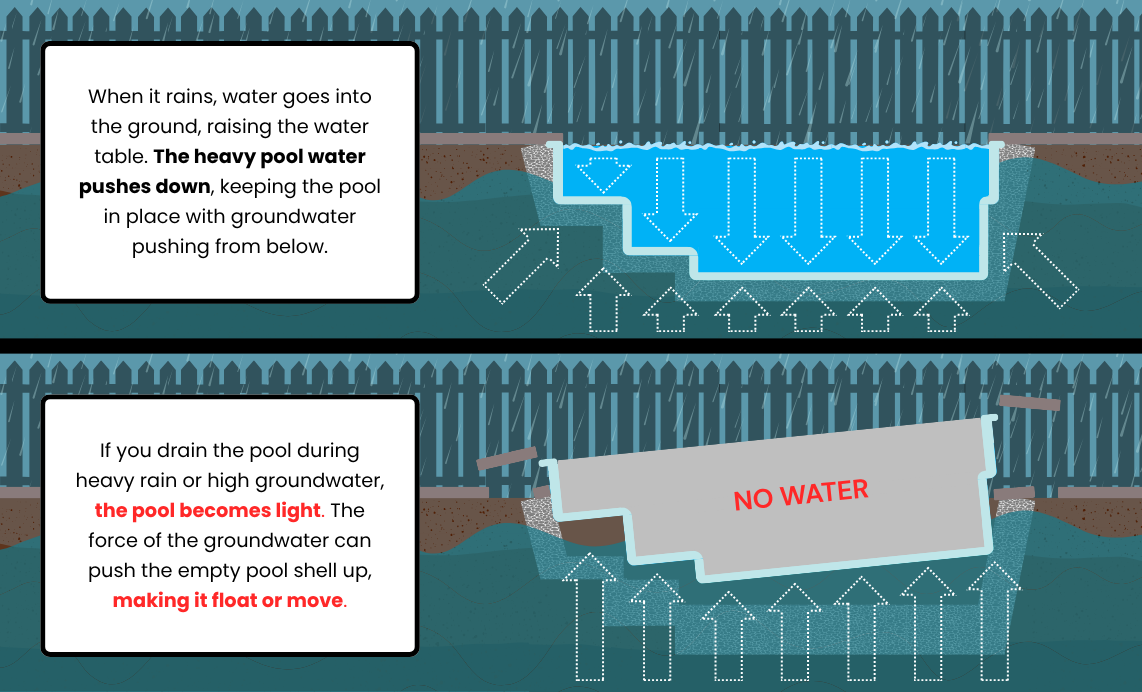
The main danger is what happens when the water weight disappears. A fibreglass shell is designed to stay full, and if the ground around it is wet or the water table is high, the pool can lift, shift, or suffer damage once it is emptied.
If the water is green from an obvious algae bloom, the main job of shock treatment is to hit the water with a strong enough dose of chlorine to kill the algae fast and bring the pool back under control.
Know When to Get Professional Help
Most weekly pool care jobs are easy enough to handle on your own. Still, there are times when the smarter move is to stop guessing and get a pool professional involved.
It is worth getting help if your pool keeps turning green, the water stays cloudy after repeated balancing, the pump sounds odd, you notice a leak, or the shell shows cracks, blisters, stains, or rough patches that do not improve with normal care.
Professional help also matters anytime draining is even being considered. Draining is treated as a last resort, and routine cleaning, chemical problems, and many algae cases can usually be handled without emptying the pool, while draining should only be done carefully by trained professionals due to the risk of movement or shell damage.
Final Thoughts
Balanced water is one of the easiest ways to keep a fibreglass pool clear, safe, and pleasant to swim in. When you test often and fix small issues early, you protect the water, the gel coat finish, and the equipment that keeps everything running well.
One simple habit makes a big difference: test your water on the same day each week and write the results down. That small routine helps you spot changes early, avoid guesswork, and keep chemical balance from slipping too far.
If you ever need help with your fibreglass pool project, just reach out to us. We are licensed installers with years of experience installing and cleaning fibreglass pools in Mackay, and we're happy to chat or give you a quote.
And if you're still thinking about which fibreglass pool to choose, check out the fibreglass pool designs our partner offers. There's always something for every backyard and budget.