
Seeing stains on a fibreglass pool is frustrating. Green smudges, brown rings, or white chalky marks can make clean water look dirty. They don't go away on their own and can get worse fast.
Left alone, stains can spread and set in. They can be hard to scrub off and might damage your pool's smooth gel coat if you use the wrong tools. Using the wrong chemicals can make the problem worse, waste money, and even cause new stains to appear.
This guide shows simple, safe steps to identify, remove, and prevent stains in fibreglass pools. You'll learn what each stain means and how to fix it using fibreglass-safe methods.
Highlights
- Organic stains, including algae, leaves, and bird droppings, can often be removed through brushing and pool shocking.
- Inorganic stains come from metals like iron, copper, manganese, or mineral buildup, which require specific actions depending on the metal or scale type, including gentle cleaning and use of sequestrants.
- Water chemistry balance also affects staining: pH, chlorine, alkalinity, and calcium hardness need regular checks.
- Visual identification and stain testing help determine stain type for treatment using safe fibreglass-compatible methods and products.
- Prevention relies on regular pool maintenance like debris removal, water chemistry balance, and avoiding metal contamination.
Types of Fibreglass Pool Stain
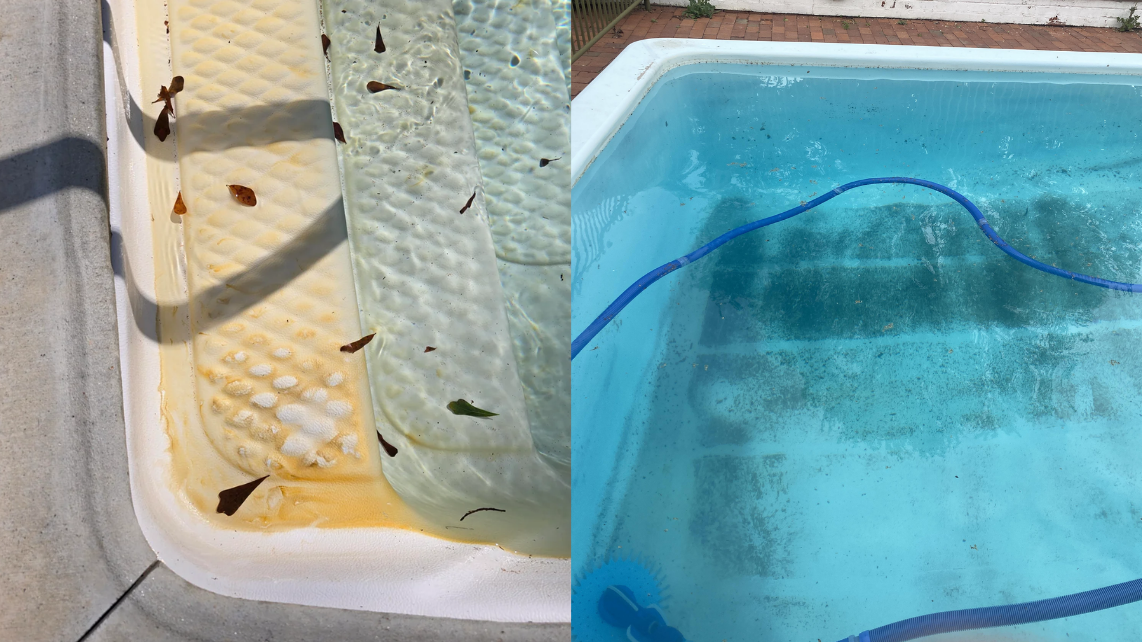 Both pool stains pictured here come from Reddit. The left image shows organic staining, mainly tannins from leaves, while the right image is suspected cobalt staining.
Stains in fibreglass pools can be tricky to handle. But before you remove them and take action, it's important to know first what type of stain you are dealing with.
Fibreglass pool stains tend to come in two main types: organic and inorganic stains. Each type needs a slightly different approach to deal with.
Organic Stains
Organic stains are caused by natural materials. These include algae, leaves, dirt, and even bird droppings. If these materials sit on your pool surface for too long, they can leave marks or slimy patches that are either easy or hard to remove.
One common culprit is tannins, which are released when leaves and plant matter break down in water, leaving yellow or brown marks on your pool surface if not removed quickly.
Luckily, organic stains are technically easier to clean compared to inorganic ones because they come from living things or debris that can be brushed away or treated with chemicals.
Common organic stains come from:
- Algae growth on pool walls or floor
- Leaves and plant debris that fall into the water
- Dirt and soil brought in by wind or rain
- Bird droppings or insects left on the pool surface
Inorganic Stains
Inorganic stains often stick around longer and usually come from minerals, metals, or chemicals in your pool water. They can be hard to remove and may need special cleaners.
Here are the main types of inorganic stains you might see:
- Iron and rust stains. This is a type of metal stain. Iron and rust can get into your pool from bore water and local water sources, or from corroding metal objects left in or near the pool, such as screws, fittings, or ladders. These typically appear as yellow, orange, or brown marks on your pool's surface.
- Copper stains. This is another metal stain. Copper often enters the pool from corroded pipes, copper-based algaecides, or a heat pump's copper parts. Copper stains can appear blue, green, or sometimes black.
- Manganese stains. Manganese is a less common metal stain. It's often found in bore water or through chemical imbalances. Manganese stains look brown, black, or even purple.
- Cobalt stains. Another metal stain, these show up as small grey or black spots, especially in older fibreglass pools. Cobalt can come from within the fibreglass shell itself, as some resins contain cobalt that then reacts with water.
- Calcium scales. This is a build-up of calcium salts from hard water, possibly combined as well with the slow breakdown of your pool's gel coat caused by UV exposure and high pH. It appears as white, chalky, or rough patches that feel gritty to touch.
- Chemical stains. Stains caused by pool chemicals that are not added carefully or are poorly balanced. These stains can look faded or patchy and are sometimes yellow, green, or blue.
How Water Chemistry Affects Staining
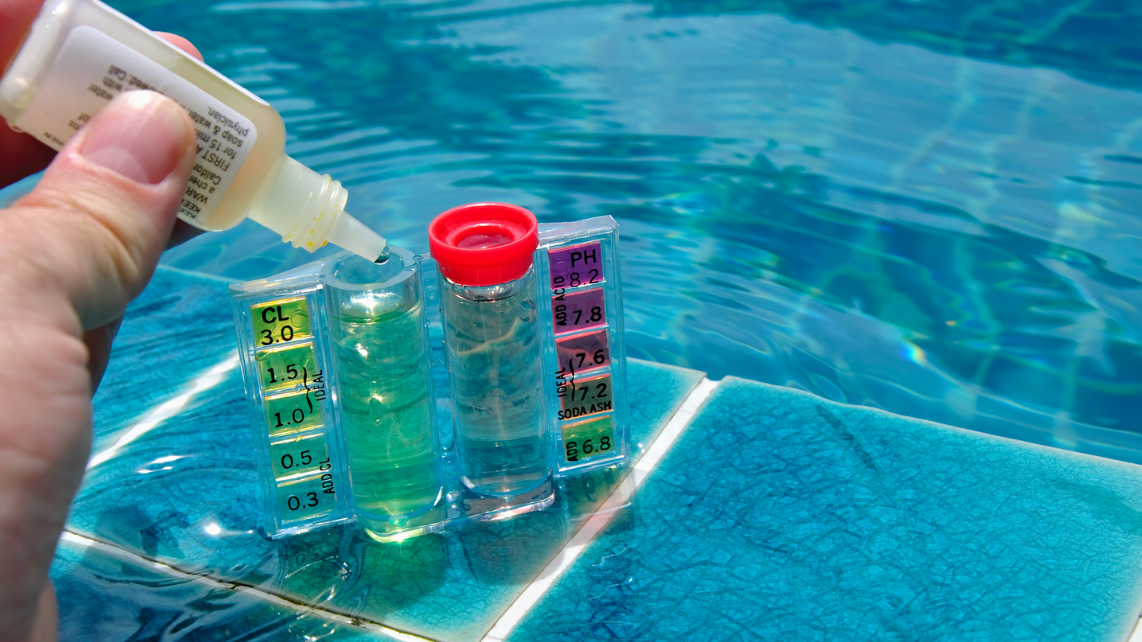
Water chemistry is also a big deal when it comes to pool stains. If things are out of balance, stains can appear quickly and sometimes won't budge without correcting the water first.
Let's go through some common terms you'll see on pool test kits and what each one means for stains:
- pH is a measure of how acidic or basic your pool water is. When pH is too low (acidic) or too high (basic), it can cause metal parts to corrode, letting metal into the water. This can create metal stains. The ideal range for pH is 7.2 to 7.6.
- Total alkalinity helps keep the pH steady. If alkalinity is too low, your pH can fluctuate, making it easier for metals to dissolve into the water and cause stains. Aim for a range of 80-120 ppm (parts per million).
- Calcium hardness is how much calcium is dissolved in the water. If it's too high, you can get white calcium scale. If it's too low, your pool surface starts to break down, which can make it easier for other stains to appear. The ideal range is 175–275 ppm for fibreglass pools.
- Chlorine keeps the pool clean. If chlorine is too low, algae can grow and organic stains may appear. Too much chlorine, especially with unbalanced pH, can also react with metals and create stains. This needs to stay between 1.0 and 3.0 parts per million (ppm).
- Metals like iron, copper, manganese, and cobalt can enter the pool from tap water, old pipes, pool equipment, or some chemicals. If the water is out of balance, these metals dissolve more easily and stick to your pool surface, causing coloured stains.
To keep stains away, always check and adjust your water chemistry. Use quality test kits, and if needed, metal sequestrants – these products keep metals in the water from depositing on your pool shell.
How to Identify the Type of Stain
When you spot a stain in your fibreglass pool, don't just guess what caused it. Some stains are harmless and brush off with a bit of elbow grease. Others might keep coming back if you don't treat the real problem. So, before grabbing chemicals or calling the pros, take a few minutes to work out what sort of stain you're dealing with.
Visual Identification
The colour and look of a pool stain can give you big clues about what caused it. Often, you can tell if it's from leaves, algae, metal, rust, or even minerals just by checking the stain's colour and location.
Here's a simple table to help you work out what sort of stain you may have:
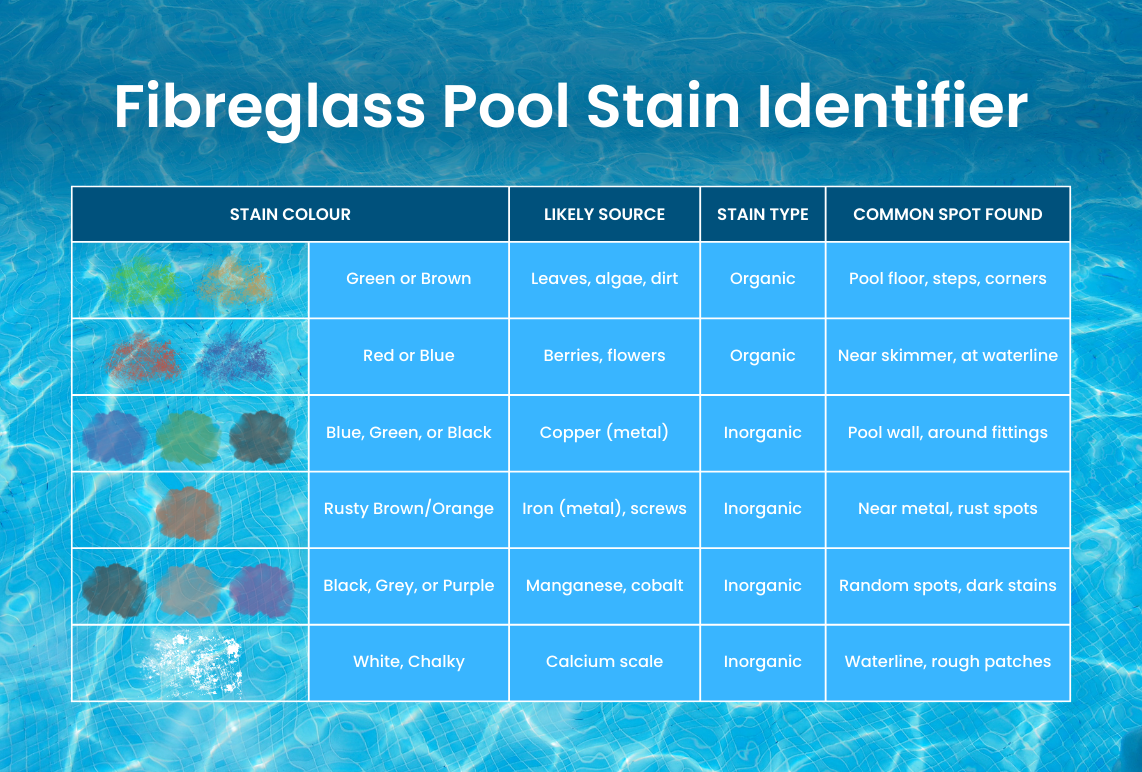
If the stain matches any of these, you'll know if it's more likely to be organic or inorganic. For tougher cases or if you're unsure, there are stain test kits you can use to be sure.
Testing the Stain
Sometimes, two stains can look very similar but need a different treatment. That's why it's good to test the stain before you try to clean it.
There are two simple ways to test stains in a fibreglass pool:
- The Chlorine Test (for organic stains)
- Take a chlorine tablet or a handful of granular chlorine.
- Place it inside a sock or an old stocking and press it on the stain for about 1 to 3 minutes.
- If the stain fades or disappears, it's likely an organic stain (from algae, leaves, or dirt).
- The Ascorbic Acid or Stain Remover Test (for inorganic stains)
- You can buy ascorbic acid (Vitamin C powder) at most shops.
- Place a small amount in a sock and rub it on the stain for a couple of minutes.
- If the stain fades or lifts, it's likely a metal stain (such as iron or copper).
If neither test works, the stain might be from calcium scale or something else, and you may need to use a special pool stain identification kit. This can tell you what kind of stain you have, so you know the right cleaner to use.
How to Remove Pool Stains
Stains might be a part of pool life, but you can tackle most fibreglass pool stains yourself. But before you try anything, always test the stain type, so you're not guessing with harsh chemicals. Using the wrong product can make things worse, especially on fibreglass surfaces.
Once you know what you're dealing with, here's how you can treat organic stains.
Removing Organic Stains
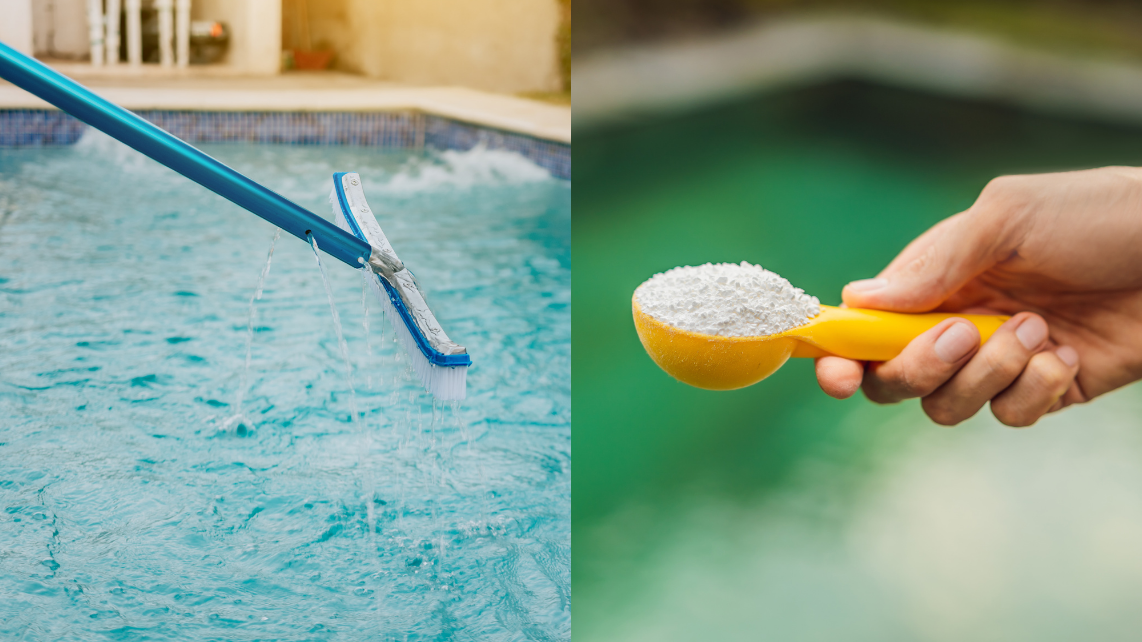
Getting rid of organic stains in a fibreglass pool usually starts with simple cleaning. If stains are stubborn, a pool shock can help.
Brushing or using a pool stain eraser:
- Use a soft pool brush. Gently scrub the stained spots. Do not use a wire or stiff brush - these can scratch the fibreglass.
- Try a pool stain eraser if brushing doesn't work. If the stain lightens up, use it on the whole stain carefully.
- Vacuum and clean. Vacuum loose bits and empty the skimmer basket so stains don't settle back in.
If the stain is still there after brushing or erasing, move on to shocking the pool.
Shocking the pool:
- Balance your pool water first. Test and adjust the pH and chlorine before any cleaning.
- Brush the stained area. Use only a soft-bristle pool brush designed for fibreglass pools. Scrub gently to avoid scratching the surface.
- Shock the pool. Add fibreglass pool shock following the label's directions and keep the filter running for at least 24 hours.
- Test and balance water again. After you're done, check and adjust chlorine and pH to safe levels for swimming.
Disclaimer: These are general instructions for shocking a fibreglass pool. Always follow the specific directions on your pool shock product's label. If in doubt, check with the manufacturer or a pool professional.
If the stain still won't budge, it may not be organic. At that stage, you might need a stain-specific treatment or test for metal or inorganic stains.
Removing Inorganic Stains
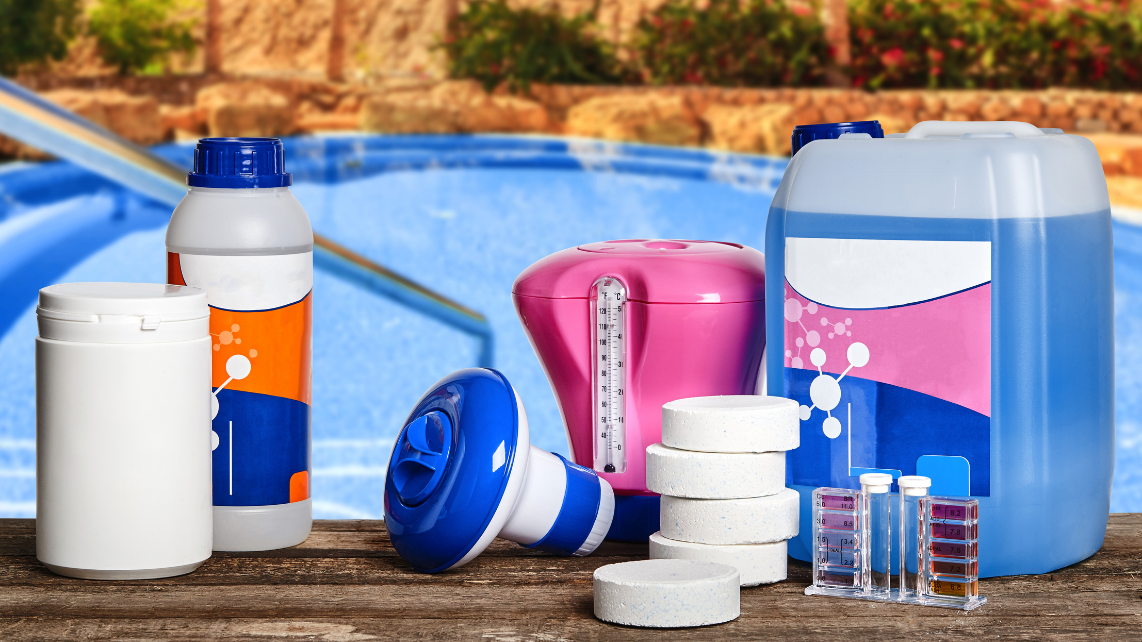
Some inorganic stains are easier than others. Each type of stain, whether it's metal, mineral, or chemical, needs a slightly different method.
Here's how to tackle the most common ones in fibreglass pools:
- Iron and Rust Stains
- Small spots: Rub a Vitamin C tablet (ascorbic acid) directly on the stain. This works by releasing the iron and fading the mark. Afterwards, use a pool brush to gently scrub and follow up by running your pool filter to help clear lifted particles.
- Larger or stubborn stains: Lower chlorine to near zero (0 ppm) and the pH to about 7.2. Dissolve ascorbic acid powder (1 pound per 10,000 gallons) and circulate for 24 hours. Add a metal sequestrant to keep iron dissolved in the water and help prevent new stains. Rebalance water after the treatment and keep your filter running for several days.
- Copper Stains
- Adjust and lower chlorine and pH first (chlorine below 0.3 ppm, pH near 7.2).
- Add a pool stain remover specifically for copper (follow your product's directions)
- Brush stained area gently using a soft pool brush.
- Run the filter for 24–48 hours and add a metal sequestrant to prevent copper stains from coming back.
- Make sure to maintain balanced water chemistry.
- Manganese and Cobalt Stains
- Use a metal stain remover labelled for fibreglass pools. Brush lightly.
- If stains persist, professional help may be needed, as some cobalt comes from the pool shell.
- Calcium Scales
- Use a fibreglass-safe stain eraser or scaling treatment.
- Try undiluted white vinegar or a pool scaling treatment for light deposits.
- Scrub gently, rinse, and repeat if needed.
- For a thick or stubborn scale, use a commercial calcium remover and follow the label.
- Never use stiff brushes or abrasive cleaners, as they can scratch or dull the fibreglass.
- For very heavy or old calcium scale or chalking, some concrete pools are treated with 'acid baths'. But for fibreglass pools, this can damage the gel coat, so any acid‑based treatment should only be done by a qualified pool professional using fibreglass‑safe methods.
- Chemical Stains
- For faded or discoloured patches from chemical imbalances, re-balance water chemistry.
- Mild spots from sunscreen or cleaners can usually be brushed away or treated with gentle fibreglass-approved cleaners.
How to Prevent Pool Stains
You can avoid most pool stains just by taking care of your pool water and cleaning up quickly. Once stains show up, they can be stubborn and a pain to fix, so the best thing is to stop them before they start. It's also a lot cheaper and protects your fibreglass pool's surface in the long run.
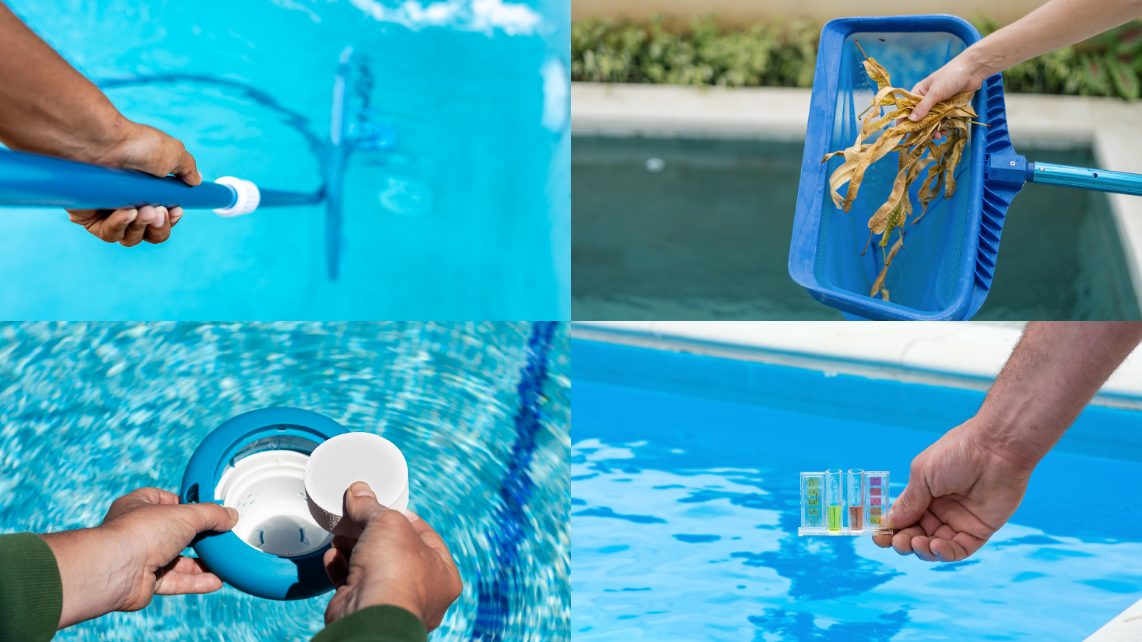
Preventing Organic Stains
Here's how you can keep these stains away:
- Remove debris straight away. Skim leaves, flowers, or anything else that falls in the water as soon as you can. The longer it sits, the more likely it will cause a stain.
- Brush and vacuum regularly. Use a soft pool brush on walls, steps, and corners at least once a week. Vacuum your pool's floor to remove bits and pieces that settle there.
- Check your water chemistry. Keep your chlorine, pH, and total alkalinity in the right ranges for fibreglass pools. Proper levels stop algae and help break down plant matter before it stains.
- Keep up with the filtering. Run your filter long enough each day to keep your pool water moving and clear of dirt. You should filter your pool for at least 8 hours a day
- Control algae early. If you see green spots or slimy patches, use an algaecide that's safe for fibreglass and shock the pool if needed to kill organic stuff before it stains.
Preventing Inorganic Stains
Here's what you can do:
- Test fill water for metals. Before topping up or refilling your pool, always test the water for metals like iron, copper, or manganese. If you find any metals, use a metal sequestrant right away to keep them from settling and causing stains.
- Add a metal sequestrant to your pool regularly. This special chemical keeps metals dissolved in the water so they won't attach to your pool shell and make stains. Follow the product's directions for how much to use and how often.
- Keep your water chemistry balanced. Maintain proper pH (7.2–7.6), total alkalinity (80–120 ppm), and calcium hardness (175–275 ppm). Balanced water stops metals and minerals from coming out of solution and making stains or rough spots.
- Don't use copper-based algaecides unless needed. These products can add copper to your water and make stains more likely. If you use one, add a metal sequestrant to help keep copper under control.
- Check and clean pool equipment. Metal objects like screws, ladders, or fittings can rust and leave stains. Inspect these parts often and replace them if you see signs of rust or corrosion.
- Brush and vacuum often. This removes mineral dust, small pieces of metal, and other bits before they can settle and stain your pool.
- Control calcium levels. If water is too hard (high calcium), white chalky scale can form. If water is too soft (low calcium), it can damage your pool surface and leave it rough. Use a test kit and adjust with pool chemicals if needed.
Essential Pool Stain Removal Items
These items make the job easier, safer, and faster, especially with a fibreglass pool. The goal is to match the right tool or chemical to the right stain to avoid damaging your gel coat.
Choosing pool care products is always a personal decision, so use this list as a helpful starting point and pick the options that suit you best. You can click the product name to buy from online shops, or you can look for the same or similar products at your local pool shop.
For Organic Stains
- For leaf and tannin stains
- Water TechniX Stain Remover – organic acid blend that targets leaf and mineral stains.
- HY-CLOR Stain Remover – removes organic stains from algae, leaves, and mould.
- For mixed organic/metal organic stains (leaf + light metal)
- SeriouStain Remover – removes mineral discolouration and organic stains without draining.
- IQ Pool Solutions Stain Remover – removes organic leaf and algae stains, and works with a metal magnet if needed.
- Aqua~Health 3 in 1 Stain Remover – helps remove algae, leaf stains, and mould.
- For oily organic build-up (sunscreen, body oils, scum line)
- Bio Natural Solutions Pool Enzymes – breaks down body oils, cosmetics, and other organic material.
- Fibreglass pool-safe brushes
- Water TechniX 45 cm Pool Brush – safe for all pool surfaces, including fibreglass.
- Aqua Fingers Microfibre Pool Broom – designed for fibreglass, vinyl, tiled pools, and pool covers.
- Filtrite All Purpose Algae Brush – non‑abrasive bristles, suitable for all pool surfaces including fibreglass.
For Inorganic Stains
- For metal stains (iron, copper, manganese)
- HY-CLOR Metal Stain Remover – helps remove iron, copper, manganese and rust stains from pool surfaces.
- Lo-Chlor Metal Solution – concentrated metal sequestrant that removes and controls dissolved metals in pool water.
- BioGuard Metal Go – removes iron and manganese staining using a citric-acid based formula, safe for all pool types.
- Pool Pro Ascorbic Acid Stain Remover – pure ascorbic acid that reduces and removes rust, organic and oxidation stains.
- For calcium scale and white chalky deposits
- Pool Pro Calcium Remover – liquid treatment designed to tackle high calcium hardness and surface scale.
- AquaPure Scale Remover & Metals Inhibitor – helps soften and remove existing scale and protects against new buildup.
- Pool Stain Removers Calcium Removal Kit – commercial grade kit that removes calcium from fibreglass surfaces without draining.
- For mixed metal/scale protection and prevention
- Pool Stain Removers Scale & Stain Eliminator – long‑lasting product that helps prevent both scale and metal stains for up to 6 months.
- AquaPure Scale Remover & Metals Inhibitor – sequesters metals like iron and copper and protects surfaces and salt cells from scale.
- CuLator Metal Eliminator – removes dissolved metals from pool water to help prevent future stains on fibreglass surfaces.
- For true cobalting (black or dark grey spots coming from the fibreglass shell itself)
- Lo-Chlor Spotaway – specifically marketed for black spots in fibreglass pools, which are cobalt oxide stains from the gel coat.
- Professional stain services and multi‑stain systems – Some Australian stain specialists and multi‑stain products handle cobalt along with other metals and scale, often as a service rather than a simple retail bottle.
Final Thoughts
Stains happen to every pool, but they don't have to stay. With the right ID, gentle tools, and balanced water, you can remove marks and stop new ones from forming. Quick action will save you both effort and money, so your pool always looks its best.
One last tip: check and balance your water weekly, skim and brush often, and treat small stains early. If stains persist or spread, test for metals and consider consulting a local pool professional for assistance.
If you ever need help with your fibreglass pool maintenance or project, just reach out to us. We are licensed installers with years of experience installing and cleaning fibreglass pools in Mackay, and we're happy to chat or give you a quote.
And if you're still thinking about which fibreglass pool to choose, check out the fibreglass pool designs our partner offers. There's always something for every backyard and budget.