
Green pool water can be confusing. The pool still smells like chlorine, the pump is running, but the water has turned an odd green and your once‑blue fibreglass pool looks tired instead of refreshing.
If you guess the cause, you can make it worse. Treat metal‑tinted water like algae and a big shock can push the colour deeper. Treat a true algae bloom like a minor stain and it will keep coming back, cloudier and slimier each time.
This guide walks you through what is really going on. You will see how to tell algae from metals, when draining is a bad idea for fibreglass pools, and the exact steps to clear green water and stop it sneaking back again.
Highlights
- Green pool water usually comes from algae; metals like copper or iron can also turn a fibreglass pool green.
- There are different levels of green pool water: mild green, heavy green, and deep swamp green.
- Draining a fibreglass pool for green water is rarely needed and can risk shell damage if not done properly.
- Algae problems need brushing, correct water balance, a strong chlorine shock, long filtration, filter cleaning, then a final retest and rebalance.
- Metal problems need confirmation with a test, stopping the source, using a sequestrant, then filtering and rebalancing the water.
- Regular testing, good circulation, clean filtration, quick action after rain or heat, and professional help keep green water from coming back.
Why Fibreglass Pool Water Turns Green
We know a green pool can look alarming. One day, the water looks fine. The next day, it looks dull, cloudy, or fully green. That said, it is actually a common problem that can occur not only in fibreglass pools but also in other pool types, such as concrete and vinyl-lined pools.
The good news is that green water does not always indicate a serious problem with your pool shell. In many cases, the real issue is poor water balance, weak sanitising, dirty filtration, or something extra in the water itself.
There are two culprits behind your pool's green colour: algae and metals. Algae is the main one. Metals are less common, but they can still turn pool water green and confuse pool owners because the fix is very different.
The Main Culprit: Algae
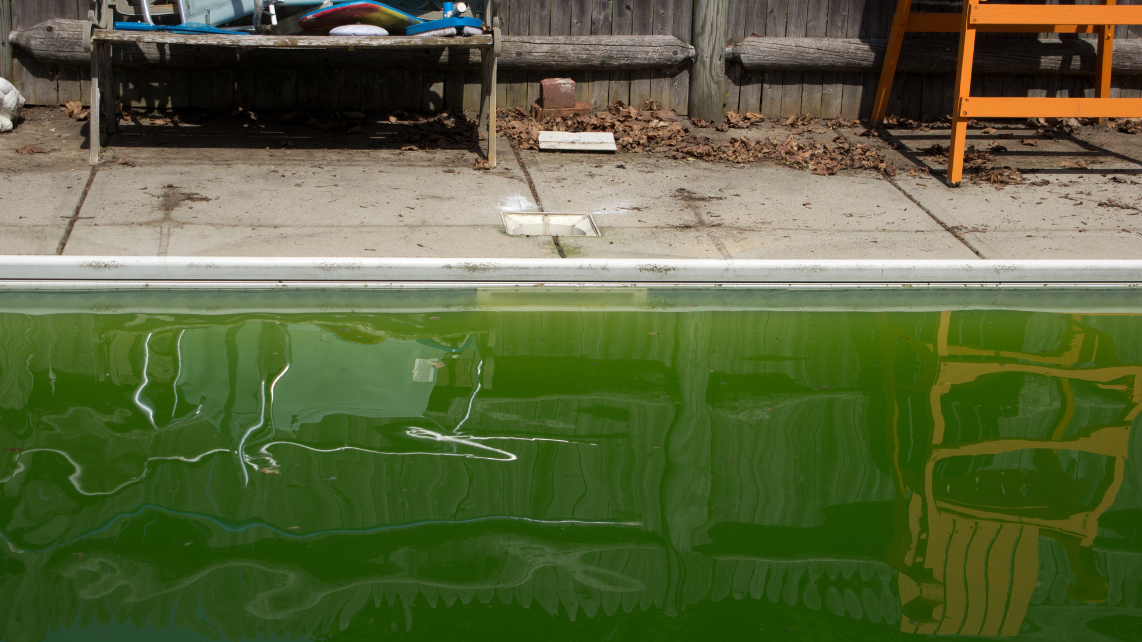
This is the most common reason pool water turns green. As you already know, algae are tiny plant-like organisms that grow in water. They are alive, and their rapid reproduction is exactly why they become abundant, often forming large blooms.
The common reasons algae take over include:
- Low chlorine levels
- High pH, which makes chlorine less effective
- Poor circulation or not running the pump long enough
- A dirty or overloaded filter
- Leaves, dirt, and other debris feeding the problem
- Hot weather, storms, and heavy pool use
Fibreglass pools have a smoother surface than concrete, so algae do not grab on as easily. That helps, but algae can still grow on walls, steps, corners, and low-flow spots if the water is neglected or the filter is blocked.
What starts as a slight green tint can turn into cloudy water, slippery surfaces, and poor visibility in a short time, especially when warm weather and weak filtration are part of the mix. Once that happens, the pool does not just look bad. It becomes harder to clean, harder to balance, and much less inviting to swim in.
The Less Common Cause: Metals
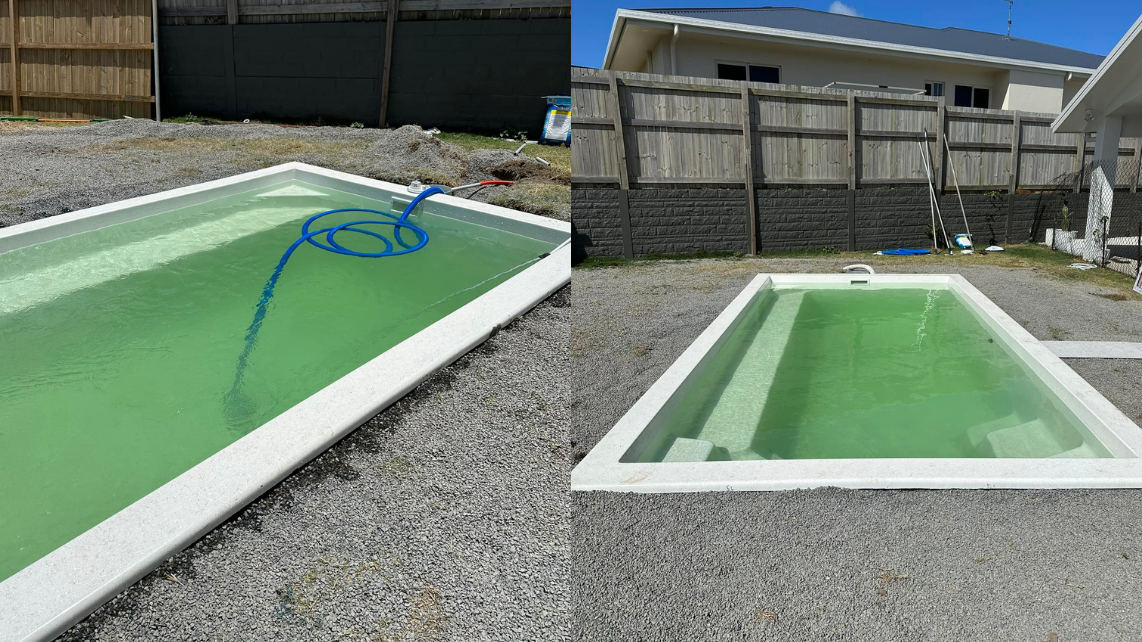
Sometimes green pool water is not algae at all. It can be caused by metals in the water, most often copper, and sometimes iron. These metals can come from the fill water, old plumbing, corrosion, or certain pool products, and when they react in the water, they can change its colour or leave stains on the pool surface.
This cause is less common than algae, but it matters because the wrong treatment can make it worse. For example, oxidisers such as chlorine can react with copper in the water and turn the pool green, which means shocking first is not always the right move if metals are involved.
If the source water contains metals, or if a pool owner uses a copper-based product, the water can still discolour, and the shell can still develop stains if the chemistry is off. Keeping the water balanced and testing when something looks off can help catch this early.
How to Tell if It Is Algae or Metals
A quick way to tell if it is algae:
- Green and cloudy water usually points to algae
- Slimy walls and poor visibility usually suggest algae
- The pool often gets greener over time rather than changing colour all at once
A quick way to tell if it is metals:
- Green but clear water may point to metals, especially copper
- Water that turns green after shocking may suggest a metal reaction
- Staining or unusual discolouration can also point to metals in the water
At first glance, both problems can look the same. The water is green, the pool looks off, and most people want a fast fix. But algae usually makes the water look dull, cloudy, or murky, while metals often leave the water green but still fairly clear.
The timing also helps. Algae usually builds up and gets worse over time, especially when chlorine is low or circulation is poor. Metals can show up much faster, often after topping up the pool, adding chemicals, or shocking the water.
Mild vs Heavy vs Deep Swamp Green Water
When the green colour slowly deepens, it usually points to algae, not metals. With algae, the pool often starts with a light green tint, then shifts to darker, murkier shades as the growth spreads through the water and across the walls.
The colour usually passes through stages, and each stage tells you a bit about how serious the problem has become.
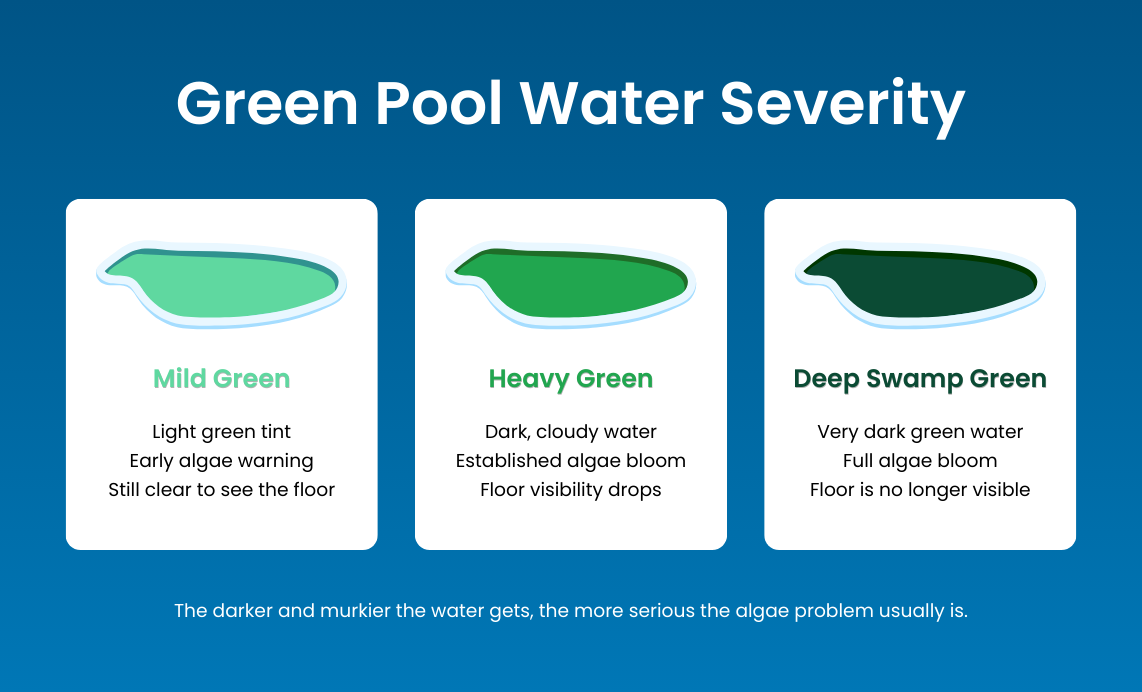
- Mild green (or teal/light green) usually shows as a light tint on the water, but you can still see the floor and most of the steps. This points to early algae growth or low chlorine, and it has not yet taken over the whole pool.
- Heavy green (mid to dark green) looks murkier, and the floor is harder to see, or even impossible to see, in the deeper end. The water often looks flat and dull, and brushing the walls may stir up visible green dust or clouds, which means algae are well established.
- Deep swamp green (very dark or almost black-green) is thick, opaque water where you cannot see the floor at all. There is usually a lot of debris on the bottom, and the pool can look more like a dam than a backyard pool. At this stage, the bloom is severe, and the pool is nowhere near safe for swimming.
The darker and cloudier the water becomes, the more work it will take to fix. Mild green usually means a smaller algae load and a quicker clean-up. Heavy or swamp green means a big build-up of algae and debris, and the pool will need stronger treatment and much longer filtration time before it is clear again.
Is Draining a Solution to a Green Pool?
Why Draining Is Usually Not Needed
When pool water turns green, many people think the only fix is to empty it and start again. For a fibreglass pool, that is almost never the first answer. Green water from algae or mild contamination can usually be cleared with the right chemicals, brushing, and plenty of filtration, all while the pool stays full.
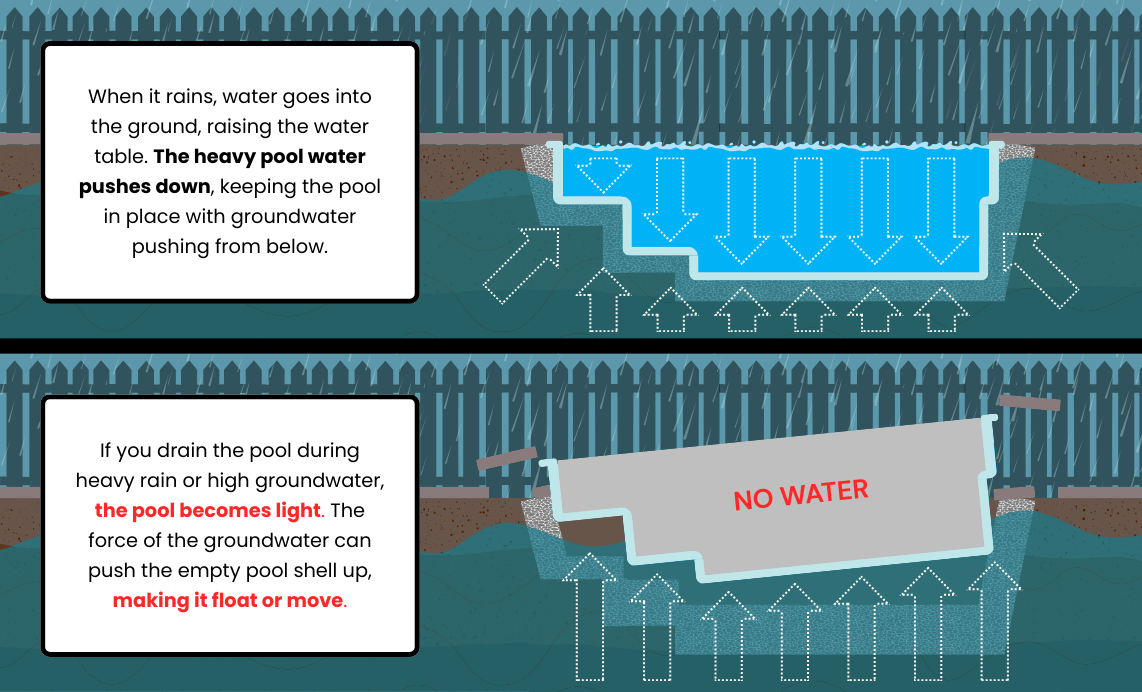
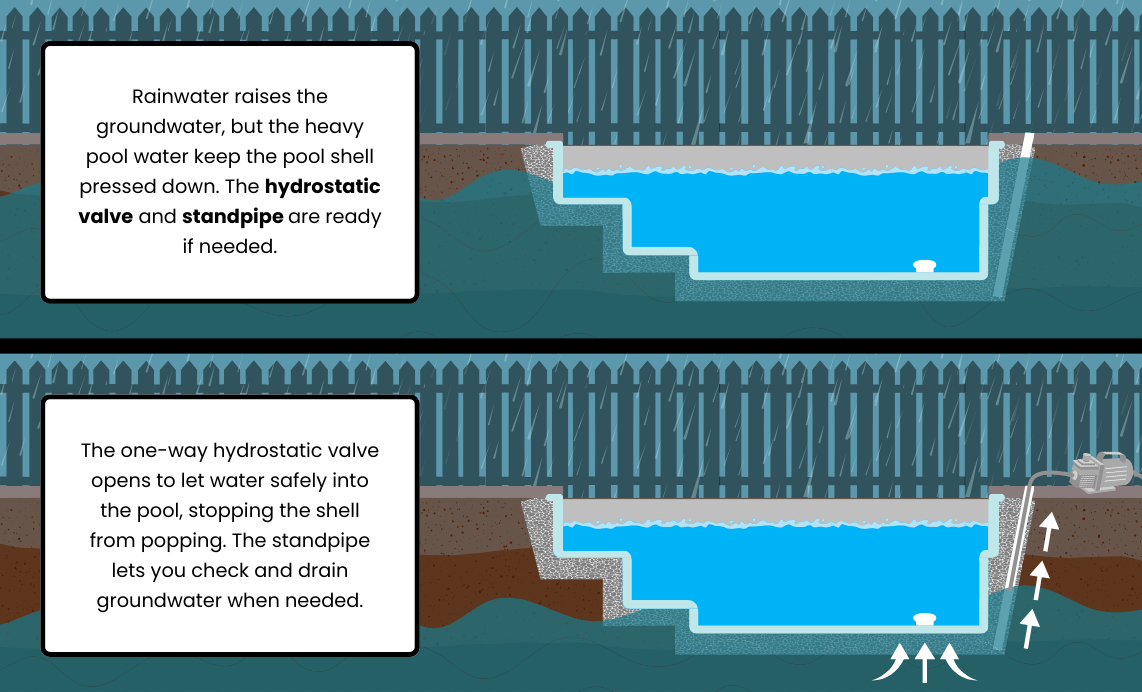
A fibreglass shell is designed to sit in the ground with the weight of the water holding it in place. That water weight pushes the shell down and helps balance the pressure from the soil and any groundwater around it. Take the water away, and you remove that weight. If the ground is wet or the water table is high, the empty shell can lift, twist, crack, or even pop up like a boat.
When Draining May Be the Only Option
There are still a few situations where draining may be needed. These are rare and usually concern the condition of the shell or the quality of the water, not just a normal algae bloom.
In these cases, the pool should be drained by trained professionals who can brace the shell, manage groundwater using the hydrostatic valve and standpipe, and follow the drainage guidance set in Australian Standards for fibreglass pool installations.
Draining may be the only option if the pool needs major repair or renovation, such as resurfacing, fixing serious structural damage, replacing certain built-in fittings, or dealing with a severe contamination event where the water has been polluted by things like sewage, heavy flooding, or a big chemical spill that cannot realistically be corrected with normal treatment.
For more information about draining a fibreglass pool, click here to check our comprehensive guide.
How to Fix Green Pool Water Due to Algae
When the pool is green from algae, the goal is simple. Kill the algae, get it out of the water, and then get the chemistry back into a healthy range. You do not need to drain a fibreglass pool to do this. The fix is a set of steps that is very easy to do.
1. Remove Debris and Brush the Pool
Start by getting rid of anything you can see. Scoop out leaves, twigs, insects, and other debris from the surface and floor. The less rubbish sitting in the pool, the easier it is for chlorine to focus on killing algae instead of being used up on rotting leaves and dirt.
Once the bulk debris is out, brush the whole pool. Use a fibreglass‑safe pool brush with soft or medium nylon bristles. Work from the shallow end to the deep end, brushing walls, steps, benches, corners, and the floor.
After brushing, the water may look worse for a short time. That is normal. It simply means the algae is off the surface and floating in the water, where the chlorine can attack it. Leave the pump running as you move to the testing step so the loosened algae continues to move through the system.
2. Test and Balance the Water
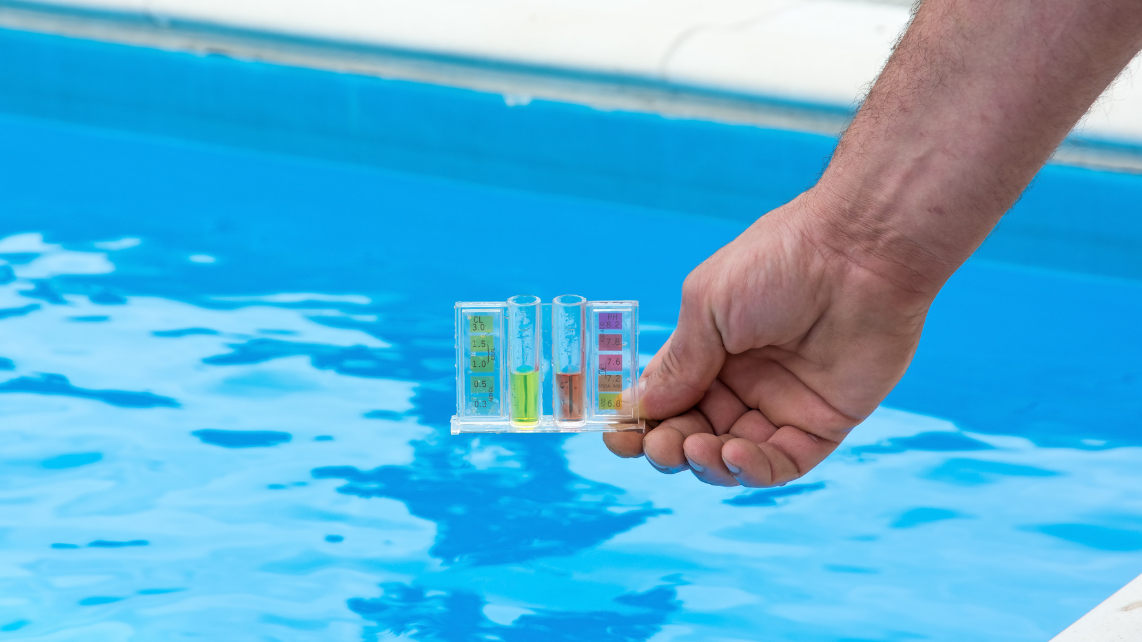
Before you add any shock, check what is going on in the water. This tells you how hard the chlorine will have to work and whether it can do its job properly.
Aim for these ranges in a fibreglass pool:
- pH around 7.2 to 7.6 so chlorine stays effective and the water feels comfortable on skin and eyes.
- Total alkalinity around 80 to 120 ppm to help keep pH stable and stop it from swinging up and down.
- Free chlorine usually 1.0 to 3.0 ppm for normal use (it will go much higher during shocking).
- Calcium hardness roughly 175 to 275 ppm in a fibreglass pool so the water is not too soft or too scale‑forming.
- Stabiliser (cyanuric acid) about 30 to 50 ppm in outdoor pools to protect chlorine from strong sunlight without locking it up.
Adjust alkalinity first, then pH. Once those two are in range, you can move on to shocking.
3. Shock the Pool
Once the water is balanced, give the pool a strong chlorine shock to kill the algae. A quality pool shock with a high available chlorine level (often around 60–70% if you use a cal‑hypo product) is commonly used for green pools.
Always check the label, check that it is safe for your surface, and follow the directions for your exact product and pool size.
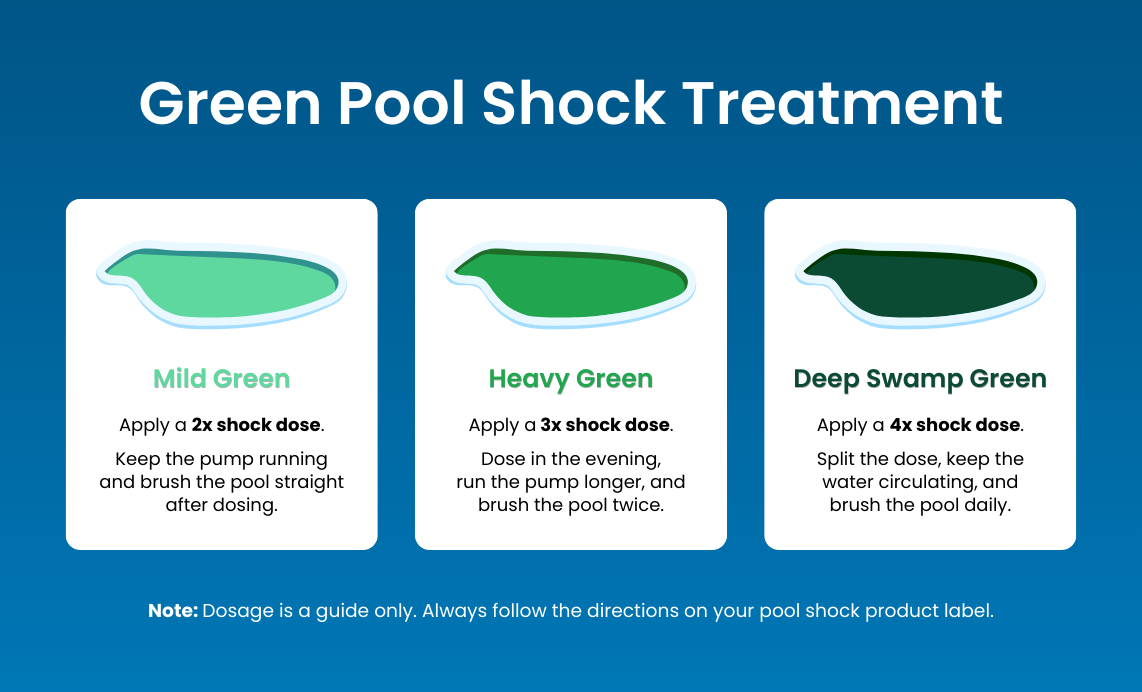
Use more shock as the green gets worse:
- Light green water: Use around a 2x shock dose for your pool volume, following the directions on the packet or bottle.
- Heavy green water: Use about a 3x shock dose so there is enough chlorine to tackle the extra algae and debris.
- Deep swamp green water: Use roughly a 4x shock dose, often split over more than one night, while staying within the product's safety limits and directions.
Add shock in the evening if you can so sunlight does not burn it off quickly. With the pump running, slowly pour pre‑dissolved granular shock or liquid shock around the edge of the pool, staying away from skimmer boxes and fittings.
After shocking, give the pool another good brush once the chlorine has had time to mix. This second scrub helps break up dead and dying algae so it can move into the main water and through the filter instead of clinging to the fibreglass surface.
4. Run the Filter Until Clear
After shocking and brushing, the pool usually turns from green to a cloudy blue or grey. That cloudy look is mostly dead algae and fine particles hanging in the water. The only way to get that out is to keep the pump and filter running long enough to trap it.
For a mild or medium bloom, aim to run the filter continuously for at least 24 hours after shocking. For a heavy or swampy bloom, expect to run it much longer, often over several days, checking pressure and flow as you go.
If the water is still cloudy after long run times, a clarifier or flocculant can sometimes help clump very fine particles so the filter can catch them more easily, but these should be used carefully and only as directed on the label.
5. Vacuum and Clean the Filter
As the water clears, more of the dead algae and dirt will settle on the floor. Vacuum this to waste if your system allows it, or slowly through the filter if you do not have a waste line.
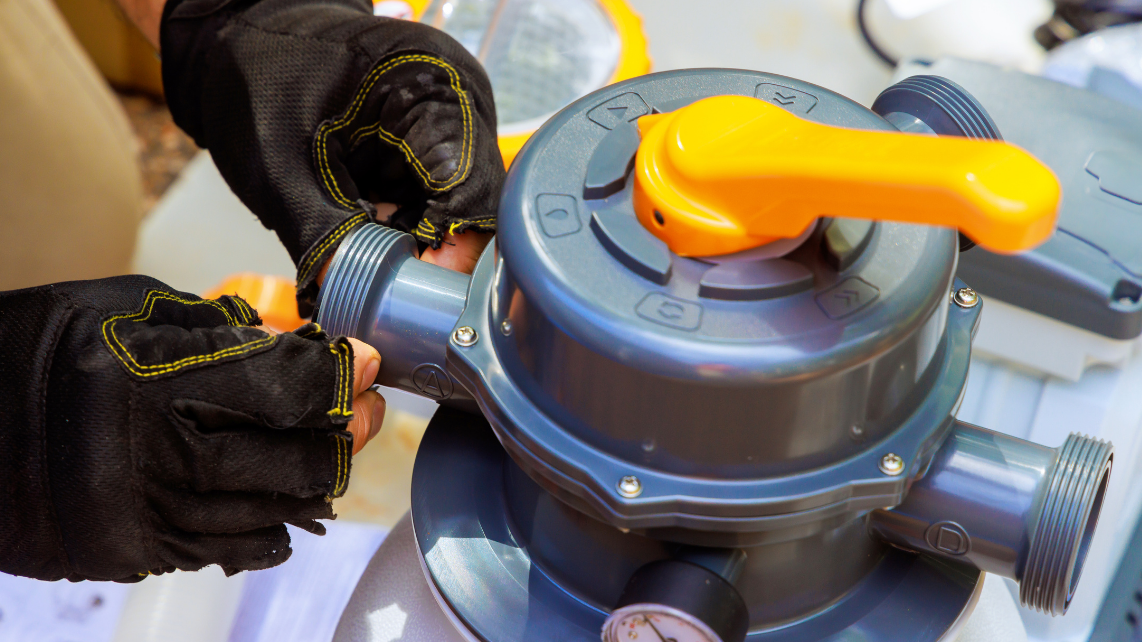
For a sand filter, that usually means backwashing until the wastewater runs clear, then rinsing if your valve has a rinse setting. For a cartridge filter, hose the cartridge down thoroughly and replace it when it no longer comes clean, or the pressure stays high.
After the filter is cleaned, restart the pump and let it run to polish the water. By now, the pool should be back to blue, even if there is still a hint of cloudiness that needs a bit more filtering time.
6. Retest and Rebalance the Water
Once the pool is clear and the filter is clean, go back to the test kit. Shock and heavy filtering can push your levels around, so it is normal for chlorine, pH, and alkalinity to look different from where you started. The aim now is to bring everything back into the normal day‑to‑day range for a fibreglass pool.
Test pH, total alkalinity, and free chlorine first, then check stabiliser and calcium hardness if you can.
When the water is clear, the surfaces are clean, and these key numbers sit in range, the algae job is done.
How to Fix Green Pool Water Due to Metals
When metals like copper or iron are the reason for green water, the pool usually looks different from an algae bloom.
The goal here is not to kill anything (metals are not alive). The aim is to confirm that metals are the real cause, stop more metals getting in, and then use the right metal treatment so the particles can stay in solution and be removed gradually through filtration.
1. Confirm That Metals Are the Cause
Start by checking the signs. If the water is green but still quite clear, and the colour appears soon after adding chlorine or filling the pool, metals are a strong suspect. If the walls are slimy, the water is cloudy, and the green builds up slowly over days, it is more likely to be algae instead.
The best way to confirm a metal problem is with a proper water test. You can use metal test strips that measure copper and iron, or take a water sample to a pool shop for a full test.
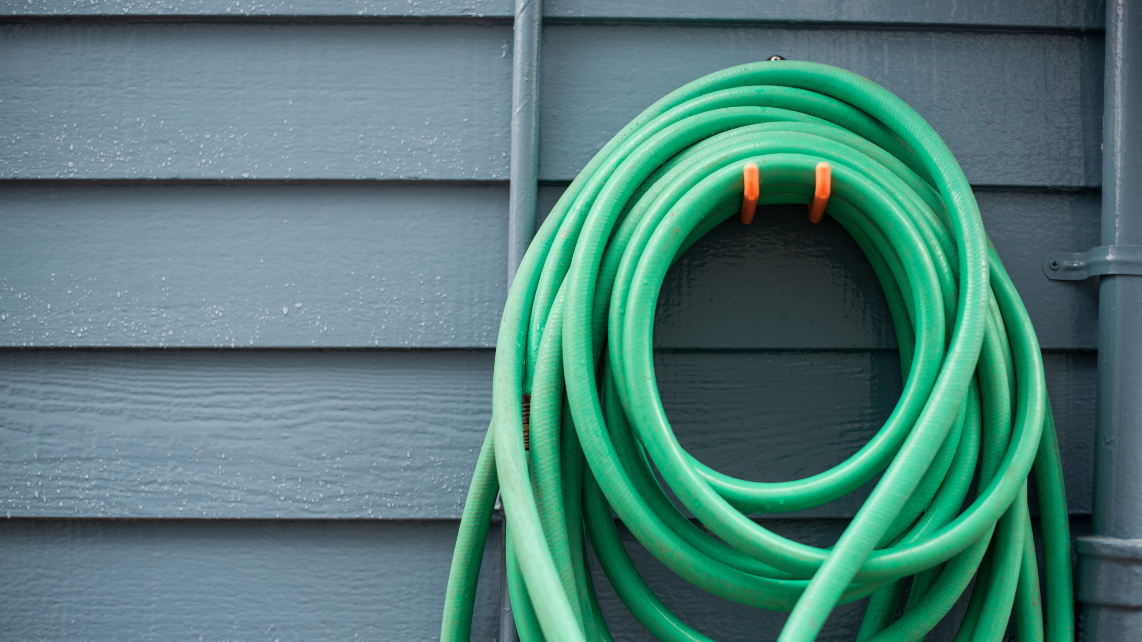
Checking the fill water is also useful. If you use bore, well, or older town water, run a test straight from the hose. High metal readings there mean every top‑up can add more metals to the pool unless you treat or pre‑filter it.
2. Stop the Source of the Metal
Once you know metals are involved, the next job is to stop more metals from getting in. Otherwise, you treat the water, only for the problem to come straight back.
Common fixes include switching away from copper‑based algaecides or mineral systems, addressing any corroding metal fittings or heat exchangers in the circulation system, and thinking about how you top up the pool.
If your hose water is high in iron or copper, you may need to fill more slowly, use a pre‑filter on the hose, or plan to use a metal removal or sequestrant product whenever you add a large amount of fresh water.
3. Add the Right Metal Treatment
Once you know metals are the problem and you have stopped more from coming in, you can treat what is already in the water.
Think about metal treatment like this:
- Use a metal sequestrant or metal control product that is clearly marked as safe for fibreglass pools, and dose it to suit your pool volume as shown on the label. These products bind to dissolved metals like copper and iron, so they are less likely to stain the shell.
- Add the product with the pump running on normal circulation, usually spreading it slowly around the pool so it can mix evenly. Many sequestrants work best when the pH is near the lower end of normal, around 7.2–7.4, to help keep metals dissolved.
- If you have just done a strong chlorine shock, wait until the chlorine level has dropped closer to normal before adding a metal treatment, because very high chlorine can reduce how long some sequestrants last in the water.
- For visible metal stains on the fibreglass shell, a separate stain‑removal product that is suitable for gel coat may be needed first, followed by a metal control product to catch the released metals so they do not settle back onto the surface later.
4. Filter, Retest, and Rebalance
After adding the metal treatment, keep the pump and filter running so the water keeps moving. Over time, small amounts of metals can be captured in the filter or removed when you backwash, clean cartridges, or dilute the pool by splash‑out, vacuuming to waste, or partial top‑ups.
Retest the water after treatment. Check pH, alkalinity, and chlorine, as metal products and stain removers can sometimes nudge these numbers around.
If your fill water is metal‑rich, plan on using a maintenance dose of metal control product as directed, especially after larger top‑ups, to keep the green tint and staining from returning.
How to Stop Green Pool Water from Coming Back
Once the pool is clear again, the real goal is to keep it that way. Green water usually sneaks back for the same reasons: weak chlorine, unbalanced pH or alkalinity, poor circulation, dirty filtration, or fresh metals and debris in the water.
Keep Chlorine, pH, and Alkalinity in Range
We keep coming back to these three numbers for a reason. When chlorine, pH, and alkalinity stay in range, algae struggle to grow, metals behave better in the water, and the fibreglass surface stays happier and easier to clean.
Simple things to do:
- Test the pool at least once a week, and more often in hot weather or when the pool is busy.
- Fix total alkalinity first, aiming for roughly 80–120 ppm so pH stays stable and does not swing.
- Adjust pH next, keeping it around 7.2–7.6 so the water feels comfortable and chlorine can work properly.
- Keep free chlorine roughly 1.0–3.0 ppm in normal use so germs and algae are controlled without being harsh.
- Check stabiliser and calcium hardness from time to time so the water stays kind to the fibreglass shell and does not waste chlorine.
Run the Pump and Clean the Filter
Good circulation and a clean filter quietly stop a lot of green‑pool dramas before they start. Moving water spreads chemicals, pushes debris to the skimmer, and stops dead spots where algae love to grow.
Simple things to do:
- Run the pump long enough each day for the whole pool volume to pass through the filter at least once.
- Make sure the return jets give visible movement across the pool.
- Empty skimmer and pump baskets often so the flow stays strong.
- Backwash a sand filter whenever the pressure gauge rises above its clean starting mark.
Test Fill Water for Metals
Fill water can quietly undo your hard work. Bore, well, or older town supply can carry copper or iron that only shows up once you add chlorine. Knowing what is in that water makes metal problems much easier to prevent.
Simple things to do:
- Test a hose sample for copper and iron before big top‑ups or refills.
- Ask a pool shop for a full metal check if you are unsure.
- Use a metal control product whenever you add a lot of fresh water.
Act Fast After Rain, Heat, and Heavy Use
Weather and busy swim days can chew through sanitiser quickly. Hot sun, warm rain, and lots of swimmers all add contaminants and dilute or burn off chlorine, which gives algae a chance to start if the pool is left alone.
Simple things to do:
- After heavy rain, clear debris and test the water.
- After storms, run the pump longer than usual.
- In hot weather, check chlorine more often.
- After big swim days, add a small chlorine boost.
- Any time you see a light green tint, act the same day.
Know When to Call for Help
Most green pool problems can be sorted with home testing, brushing, and careful chemical use. But sometimes the water stays stubbornly green, the shell is stained, or the chemistry will not stay in range, no matter what you do.
Good times to bring in a fibreglass pool professional:
- The pool has been dark green or swampy for more than a week.
- Stains stay on the fibreglass shell after normal treatment.
- Chlorine, pH, or alkalinity keep drifting out of range.
- The pool turns green again soon after every cleanup.
- You are thinking about draining the pool to 'start again'.
Final Thoughts
Green pool water looks scary, but it is usually a sign of chemistry, metals, or filtration, not a ruined fibreglass shell. Once you know whether algae or metals are behind the colour, the fix is clear, and draining the pool is rarely the right first move.
If you take one thing from this guide, let it be this: small, regular habits beat emergency fixes. Test the water, keep chlorine, pH, and alkalinity in range, run the pump long enough, and act fast when the water looks even slightly off.
If you ever need help with your fibreglass pool project, just reach out to us. We are licensed installers with years of experience installing and cleaning fibreglass pools in Mackay, and we're happy to chat or give you a quote.
And if you're still thinking about which fibreglass pool to choose, check out the fibreglass pool designs our partner offers. There's always something for every backyard and budget.