
So you're planning to install a fibreglass pool in your backyard. Digging in and doing it yourself sounds easy, but it takes much more than just a shovel. Many eager DIYers are caught off guard by the rules, tricky soil, and surprise costs waiting below the surface.
It's easy to miss a key step if you rush in. Forgetting about underground pipes, the right permits, or even the type of soil can lead to costly delays or repairs.
Luckily, we will walk you through the most important questions to ask before you start digging for a new fibreglass pool, giving you the confidence to do it right from the very beginning.
Highlights
- Council approval and permits are mandatory before starting your fibreglass pool installation in Mackay to ensure safety and legality.
- Checking for underground pipes and cables before digging helps avoid serious hazards, costly repairs, and legal issues.
- Soil type impacts pool stability; reactive clay soils require special excavation, backfill materials, and drainage systems to prevent damage from swelling or shrinking.
- Proper equipment access is needed; narrow gates or tight spaces may increase costs, so plan the access points before excavation begins.
- Avoid using excavated soil for backfilling; instead, use clean, free-draining materials like crusher dust or stabilised sand to prevent shifting or damage to the pool.
- Professional help is recommended for licensed tasks like electrical, plumbing, or precise installation steps, plus your pool supplier typically provides support and advice throughout your DIY process.
Q1: Do I need council approval before I start?
Like any other infrastructure you want to build, you definitely need council approval and permits before you install a fibreglass pool in Mackay.
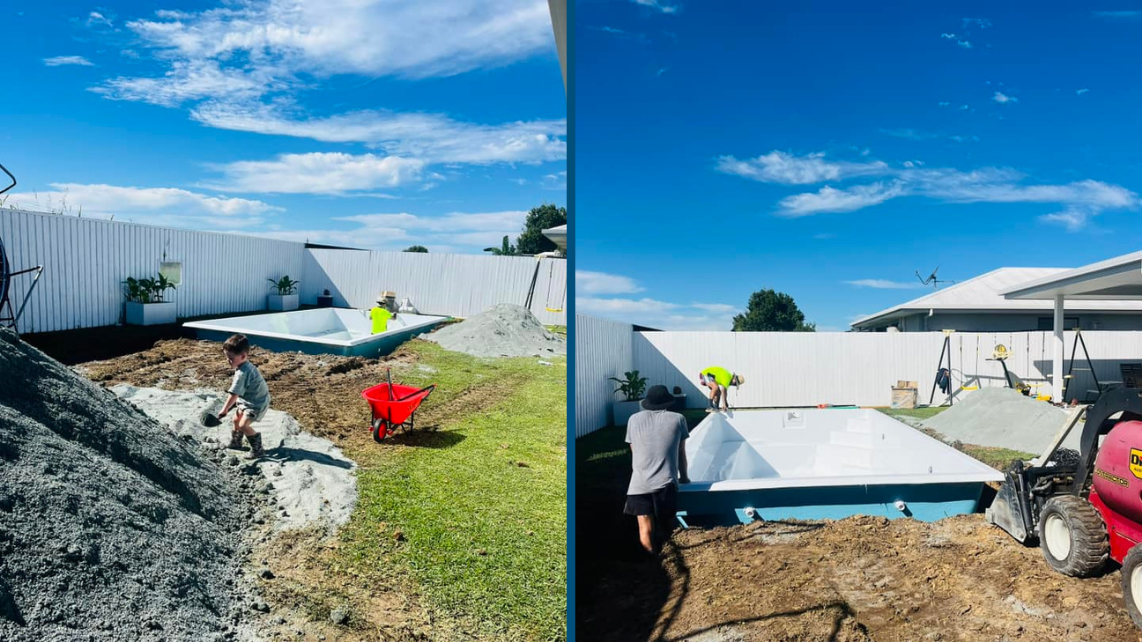
This is not just a legal step but a safety one to ensure your pool is installed correctly and complies with all local laws. Starting without approval could lead to fines or the requirement to undo any work done. And when you're planning for a DIY fibreglass pool installation, you must apply for the right permits through the Mackay Regional Council.
This process can take several weeks, so it's wise to get it started early. The council will review your plans to make sure your pool installation meets safety standards, is located correctly on your property, and does not negatively impact neighbours or local infrastructure.
Here is a list of some common permits and approvals you may need for installing a fibreglass pool in Mackay, Australia:
- Development Permit: To legally start construction, ensuring zoning rules are followed.
- Building Permit: Confirming your pool design meets building regulations.
- Pool Safety Certificate/Application: Certification that your pool complies with Queensland pool fencing and safety laws.
- Plumbing and Electrical Permits: If your pool requires plumbing or electrical work (pump systems, lighting).
- Excavation Permit: Sometimes required if digging impacts underground utilities or neighbouring properties.
- Water Connection Approval: If connecting to the mains water supply.
- Soil and Environmental Assessment: For certain soil types or sensitive environments, approval might be needed.
Failure to obtain the right permits before starting may result in penalties or having to remove the pool later. Plus, without council approval, your pool might not be insurable or compliant with safety laws, which is a risk for everyone involved.
And if you don't know yet, being thorough with permits also helps with resale value. Buyers in Mackay expect pools to be fully approved and safe. Properly installing your pool with council approval gives you peace of mind that your project is done right and legal.
If you plan to hire a builder or installer, they usually help manage these permits. But if you take on a DIY installation, the responsibility to get approvals and follow rules falls entirely on you.
Q2: Are there pipes or cables underground?
Before digging for your fibreglass pool, it is very important to check for any underground pipes or cables on your property. Hitting an underground utility line can be dangerous, costly, and cause serious delays. Plus, damaging water, gas, or power lines can put your safety at risk and may result in fines.
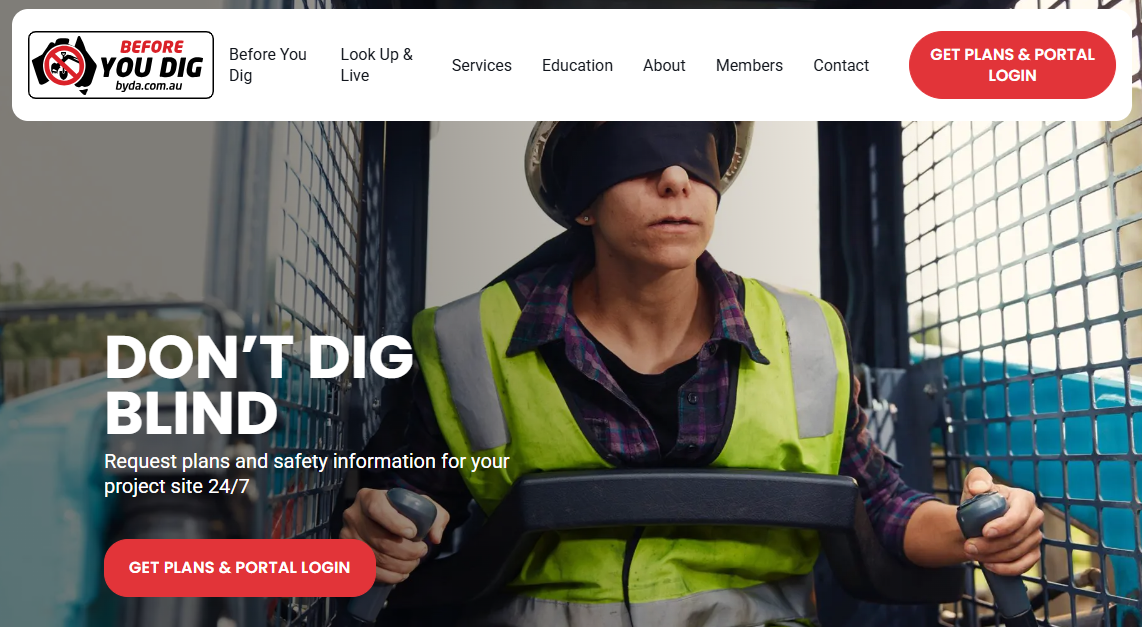 Website screenshot: byda.com.au
In Australia, you can contact Before You Dig Australia or BYDA. This is a free service that helps you identify the location of buried utilities on your land. They provide plans showing water pipes, gas lines, electric cables, telecommunications, and sewer pipes in your area.
The Australian Standard AS 1839:2021 for fibreglass pool installation highlights the need for thorough site investigation before construction begins. This includes locating and protecting underground services to avoid disturbance or damage during excavation.
If underground services are close to your pool site, you might need special support or protection while digging to avoid collapsing or damaging those services. Temporary shoring or barriers might be required, especially if the excavation is near water pipes or electrical cables, to protect both workers and utility lines.
So for DIYers, never start digging without checking for underground pipes and cables first. Always consult local authorities or utility companies if unsure. This will save time, money, and keep everyone safe.
Q3: Will my soil type affect the pool build?
Your soil type can have a big effect on the fibreglass pool installation. Different soils behave differently when wet or dry, and some can move or swell, which can cause damage to the pool structure if not properly managed.
At Pool Professionals Mackay, we conduct a soil assessment before we dig, not because we're not familiar with our local soil types, but some backyards are still built differently.
The Australian Standard AS 1839:2021 highlights the special attention needed for reactive clay soils, which are common in many parts of Australia, including around Mackay. Reactive clays shrink or swell depending on moisture, which can move the pool and cause cracking or warping over time.
For reactive clay, the standard recommends particular excavation and backfilling methods. For example, over-excavation of the shallow end of the pool to match the deep end may be necessary to control movement. Also, the use of non-reactive backfill materials like cement-stabilised sand or crushed rock is required to avoid future settling or expansion.
Drainage is also important for soil considerations. Pools installed in poorly draining soils need subsoil drainage systems and hydrostatic relief valves to control water pressure under and around the pool. These devices prevent damage from water build-up that can cause pool flotation or warping.
Always consult a competent person or engineer for soil testing if you would like to go on a DIY project.
Q4: How deep should I dig for my pool?
You should dig your pool hole deeper than the pool shell's final depth. This extra depth allows space for a bedding layer underneath the pool, plumbing, and backfilling.
Australian fibreglass pools typically come with a dig sheet from the manufacturer. This sheet shows exact measurements for the length, width, and depth of the hole. It includes an overdig allowance, usually about 100mm to 300mm deeper than the pool shell, so there is enough room for installation and plumbing.
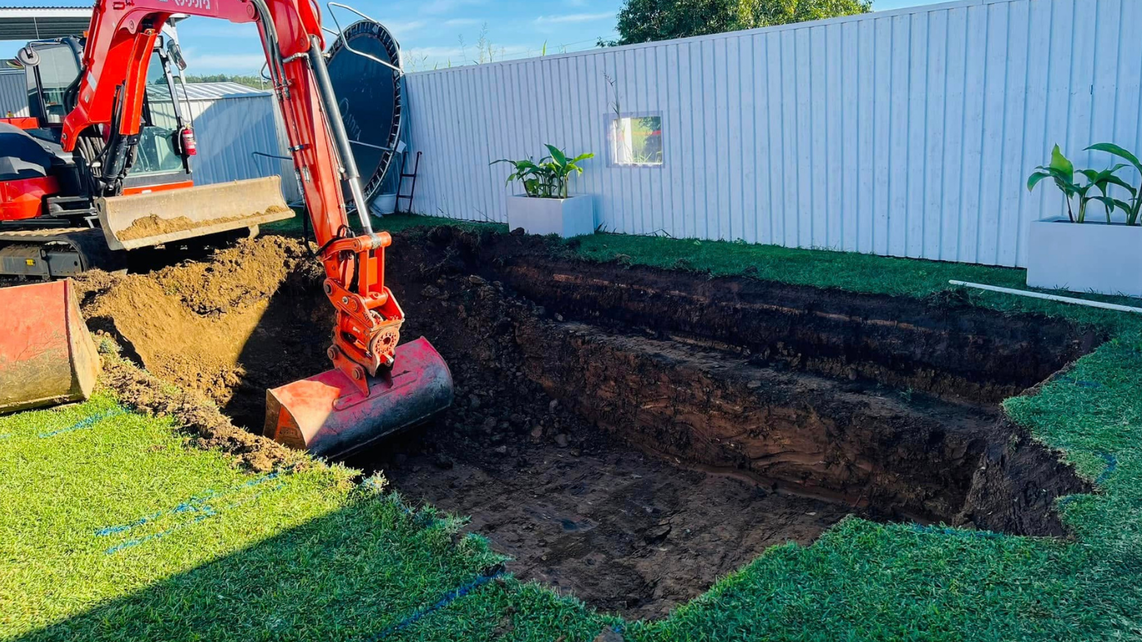
When digging, you should follow the shape of the fibreglass pool itself - not just a rectangular excavation with a flat bottom. Usually, the shallow end, mid-section, and deep end all have different depths.
For example, a pool with a 1.2m shallow end and a 1.8m deep end needs the excavation to match those heights, plus extra for bedding. You should check depths using a laser level or transit to make sure the base is even.
The Australian Standard AS 1839:2021 recommends a bedding layer made from free-draining sand or aggregate with a maximum particle size of about 6mm and a depth of around 100mm to support the pool evenly and provide drainage for possible water build-up under the shell.
If you dig too shallow, the pool won't sit correctly and could settle unevenly, causing cracks or structural damage. Too deep, and you risk extra work and cost for added backfill and bedding layer.
For uneven or sloping property sites, you might need additional excavation steps or retaining walls to properly level the pool base. Pools more than 300mm above ground may be better installed semi or fully above ground to avoid costly retaining walls.
Always follow the dig sheet and confirm measurements before and during excavation. Have the dig inspected if needed to avoid mistakes.
Q5: Do I have enough access for excavation equipment?
Your DIY installation still needs heavy machinery, so please consider the access. Big machines like excavators and cranes need a clear path to get in and out of your backyard safely. Without proper access, the digging and pool placement can become very hard or even impossible.
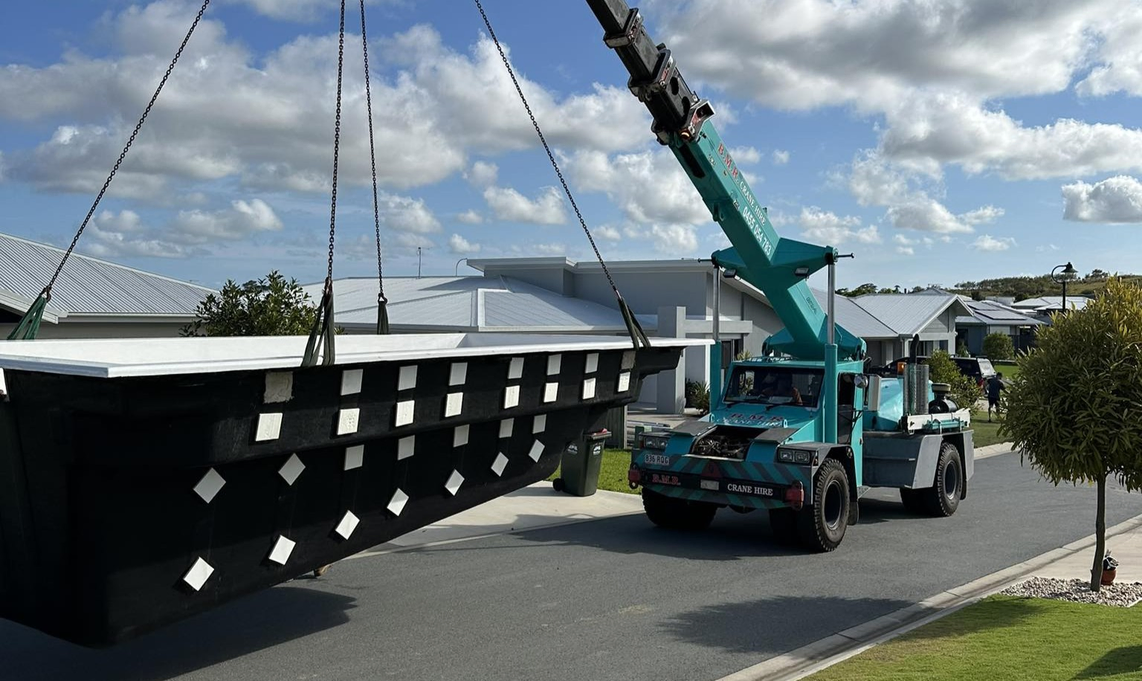
We have experience working on tight-access sites across Mackay, including those with 0.9m tight access. What we do is use smaller excavation machinery and lifting options. So the client won't worry about surprise costs later, we will visit the site as soon as possible to plan ahead.
But usually, access should be wide and high enough for machinery, often a minimum of around 1.6m wide and clear of overhead obstacles like power lines or tree branches. Narrow gates, steep driveways, or tight corners can limit the size and type of equipment you can use, which can increase costs or cause delays.
So before you dig, measure your access routes carefully and discuss with your equipment operator what space they need. Sometimes, neighbours or council approvals are needed if machinery must cross footpaths or roads.
Q6: What will I do with all the excavated soil?
You will need a plan for managing all the soil dug out for your fibreglass pool. Depending on how much soil is removed, it could be a lot, and it won't just disappear! The soil will need to be moved, stored, or disposed of properly.
Let's be clear: excavated soil should not be used for backfilling. The soil you dig up can be unstable or contain organic material that breaks down over time. In addition, it can take weeks to fully settle.
Instead, you should use clean, free-draining materials such as crusher dust or stabilised sand for backfilling. These materials compact well and allow water to drain away, reducing the risk of movement or water pressure damage around the pool.
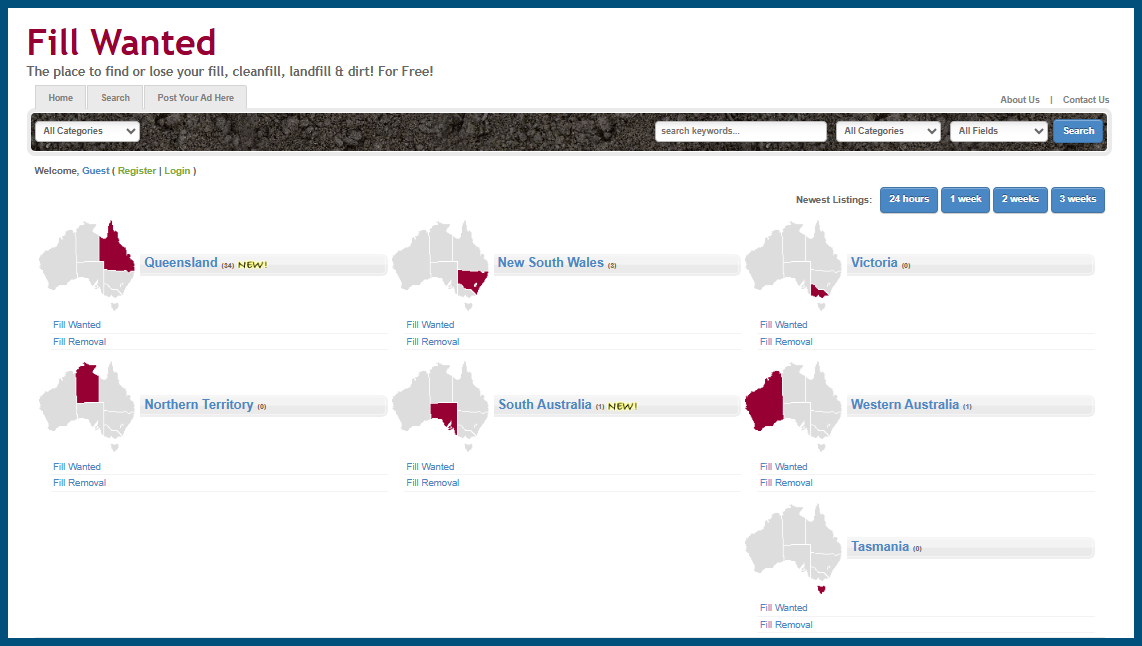 Website screenshot: fillwanted.com.au
If you need help disposing of large amounts, websites like Fill Wanted are great. You can find soil removal services from local suppliers, making the process easier and more environmentally friendly.
You can also reuse the excavated soil on your property. It can be spread out to fill low spots in your yard or used in garden beds. But make sure the soil is clean and free from rocks or debris that could cause problems later. Sometimes, you might need to stabilise the soil or mix it with other materials.
If you don't have space to reuse the soil or are tired of waiting for messages on Fill Wanted, you might consider hiring a rubbish removal service to take it away. Dumping soil illegally is against council rules and can result in fines.
Q7: What costs should I expect beyond the pool shell and digging?
Beyond the pool you bought and excavation, there are several other expenses to plan for. These can add up quickly and affect your total budget, especially if you are doing a DIY pool installation.
Here are some of the major factors that can influence your costs:
- Plumbing and filtration equipment. You need pumps, filters, plumbing pipes, and fittings to keep your pool water clean and circulating. Good quality equipment costs money but is important for the pool's longevity and ease of maintenance.
- Electrical work. The pool will require electrical connections for pumps, lights, and possibly heating systems. Depending on local rules, these jobs often need a qualified electrician, which can add to costs.
- Backfilling materials. As discussed earlier, you'll need to buy or source clean, free-draining materials for backfilling around the pool. Using unsuitable soil for backfill risks damage and extra repair costs later.
- Drainage systems. Proper drainage around the pool site is critical to avoid flooding and soil movement.
- Safety barriers and fencing. Queensland law requires pools to have safety fencing or barriers. Installing compliant fencing and gates can be costly, but it is mandatory for pool safety and council compliance.
- Site preparation and landscaping. Preparing the site beyond digging - such as removing trees, grading the land, or landscaping - adds to costs. These tasks might need equipment or contractors.
- Permits and inspections. Council permits, inspections, and approvals come with fees. These legal steps are critical for a pool that's safe and fully approved.
- Labour and tools. If you do most of the work yourself, you save on labour, but some tasks might need specialist tools you'll have to rent or buy. Hiring help for tricky parts also adds to costs.
- Pool covers and accessories. Extras like pool covers, ladders, cleaning equipment, and heaters are often not included with the pool kit but are essential over time.
The final cost is not limited to what we've listed in the bullets, but each of these factors can change your project's final budget. Being ready for these costs will help DIY installers avoid surprises and keep their pool project on track.
Q8: Do I need professional help for certain stages?
Absolutely! Even if you're keen to do your fibreglass pool installation yourself, there are some stages where professional help is important. Certain parts need skills, licences, or equipment that only trained experts have.
Professionals such as licensed electricians, plumbers, and certified pool installers can handle complex work like electrical connections, plumbing setups, and precise pool positioning. These jobs must meet strict Australian safety standards and local council rules, so having the right expertise matters.
If you try to do these yourself without proper training or permits, you could end up with costly fixes or even legal trouble. Plus, professionals know how to avoid common mistakes that delay projects.
If you need help along the way, it's a good idea to contact your pool seller. Most fibreglass pool suppliers understand that DIY installers may have questions or get stuck at certain points. A reputable seller should be happy to offer advice, provide detailed instructions, or point you towards useful resources.
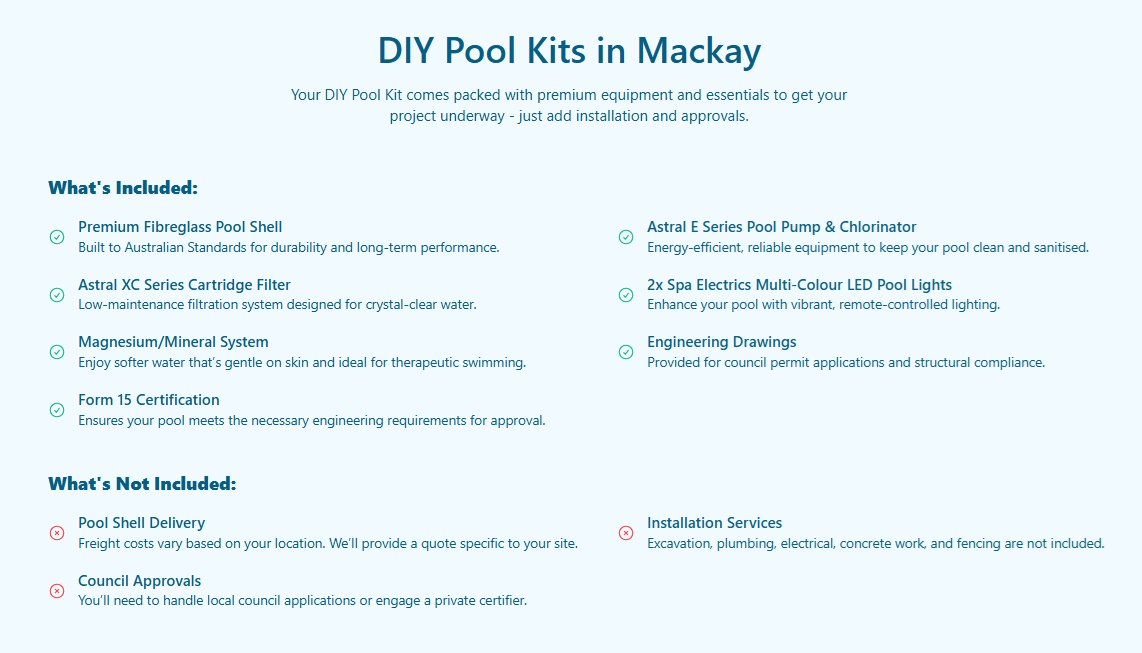 Pool Professionals Mackay's DIY Pool Kit Inclusions
Here at Pool Professionals Mackay, we support DIY pool kit buyers every step of the way - you're never on your own. You can get phone and email support, access to our guides online, and even book on-site consultations if you need them. We can also connect you with trusted tradespeople for jobs like plumbing or electrical work if needed.
DIY pools work best for those who are comfortable with tools and basic construction. If this is your first major project, we recommend reaching out to our team for advice or to help with any tricky parts.
Final Thoughts
A fibreglass pool is a brilliant investment for family fun and relaxation. With careful planning and honest answers to these questions, DIY installers can avoid big problems and enjoy a pool that's safe and strong.
If you're thinking of going the DIY route, take time to check every detail, ask for expert help where needed, and make sure that your site is truly ready before you start digging. There's no harm in getting help with the tricky part - it often leads to better results and saves time, money, and stress.
If you ever need help with your fibreglass pool project, just reach out to us. We are licensed installers with years of experience installing fibreglass pools in Mackay, and we're happy to chat or give you a quote.
And if you're still thinking about which fibreglass pool to choose, check out the fibreglass pool designs our partner offers. There's always something for every backyard and budget.